Will CBD Oil Show Up on a Drug Test? What Research Shows
Pure CBD is not what makes you fail a standard drug test: those tests look for a THC breakdown product, not for CBD. The risk comes from THC that ends up in the bottle. Full-spectrum oils contain small amounts of THC by design, and some products sold as THC-free turn out to contain it anyway. Take enough of either every day and a urine screen can come back positive. Below we explain how the tests work, which products carry the most risk and what you can do about it.
What does a drug test actually look for?
Most workplace programmes test urine. The screen is an immunoassay that reacts to THC-COOH, the inactive compound your liver makes after THC has done its work. In the United States the federal workplace rules set the screening cutoff for this metabolite at 50 ng/mL, with a confirmation cutoff of 15 ng/mL when the sample goes on to a lab test with mass spectrometry. Those numbers are published in the Federal Register notice on the federal testing panels. Private employers and other countries use their own cutoffs, often the same or close to them.
CBD is a different molecule with a different metabolism, and a standard panel does not look for it at all. If you want the background on how the two compounds differ, our piece on the differences between CBD and THC covers it.
Urine is not the only option. Blood tests pick up THC itself and are mainly used to show recent use, for example after a traffic stop. Saliva tests also target recent use and are popular for roadside checks. Hair tests look back much further, because traces get locked into the hair as it grows. None of these is designed to measure CBD, and all of them can react to THC that came from a CBD oil.
Sport is a separate case. The World Anti-Doping Agency took CBD off its prohibited list in 2018, but THC is still banned in competition, with a urinary threshold of 150 ng/mL for the carboxy metabolite. An athlete using a CBD oil that contains THC is therefore still taking a risk.
So how can CBD oil cause a positive test?
There are three routes, and all three are about THC.
Full-spectrum oil contains THC on purpose
A full-spectrum extract keeps the other compounds from the plant, and that includes some THC. The amount per drop is small, but it adds up when you take the oil every day. A clinical trial published in JAMA Psychiatry tested exactly this. Participants took a full-spectrum CBD oil with a THC content of about 0.02% three times a day for four weeks. At the end, half of them tested positive for the THC metabolite on a urine screen (Dahlgren et al.). The participants took the dose on the label.
The label is wrong
When researchers bought 84 CBD extracts online and had them tested, only around 30% contained the amount of CBD the label promised, and THC turned up in 18 of the 84 products (Bonn-Miller et al.). That study is from 2017 and the market has matured since, but third-party lab checks still find mislabelled products regularly. The "0% THC" on a bottle is only as reliable as the lab test behind it.
Cross-contamination in production
Hemp and higher-THC extracts are sometimes processed on the same equipment. Poor cleaning between batches can leave traces of THC in an oil that was meant to be free of it. You cannot see this from the outside, which is why a lab report matters more than the marketing text.
What about pure CBD isolate?
Here the evidence is reassuring. In a controlled study at Johns Hopkins, volunteers took pure CBD by mouth and by vaporiser. Out of 218 urine samples, one gave a positive result on the immunoassay at a 20 ng/mL cutoff, and none were positive on the confirmation test (Spindle et al.). In the same study, a CBD-dominant cannabis that also contained a few milligrams of THC did produce positive tests. The positive results came from the THC.
Pure isolate is still only as pure as the factory that made it. If you are tested for work, choose isolate or broad-spectrum products and check the batch report yourself.
Full-spectrum, broad-spectrum and isolate compared
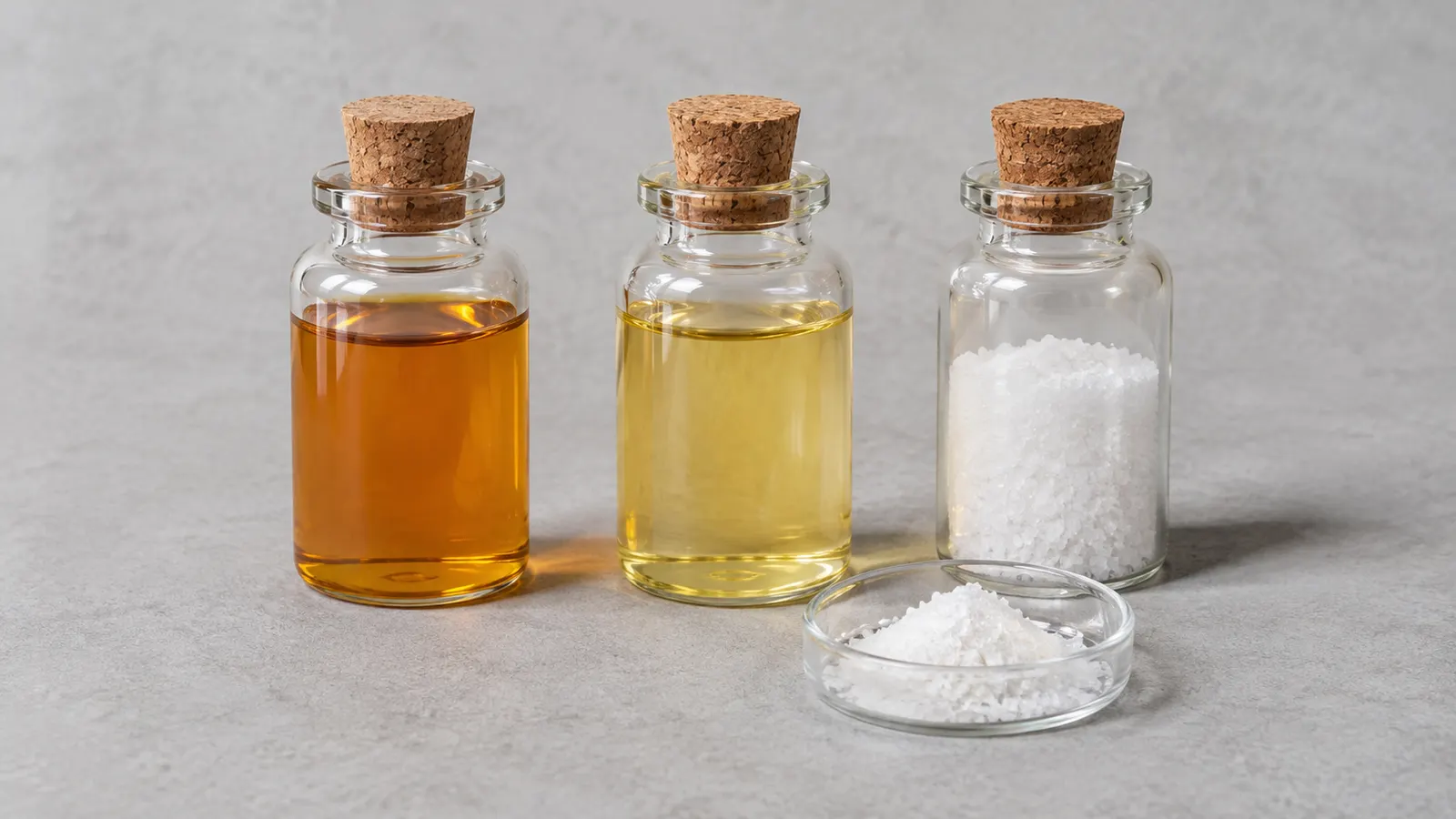
- Full-spectrum: contains CBD plus other cannabinoids, including THC. Highest risk of a positive test with daily use.
- Broad-spectrum: the THC has been removed but other compounds remain. Lower risk, but only if the lab report shows THC as not detected.
- Isolate: CBD on its own. Lowest risk, again assuming the product really is what it says.
"Hemp oil" is a confusing term on its own. Hemp seed oil, the cooking oil, contains almost no cannabinoids, while "hemp extract" usually means a CBD product made from the flowers and leaves. We explain the difference in hemp vs CBD.
Does "legal hemp" mean it is safe for a test?
No. Legal limits apply to the plant, not to your urine. In the European Union, hemp grown under the farm support rules may contain up to 0.3% THC, a limit the European Commission applies to the crop. In the United States the federal definition of hemp uses the same 0.3% figure. A product can be perfectly legal and still contain enough THC to show up when you use it every day. The JAMA Psychiatry trial above used an oil well under that limit.
Rules for CBD products also differ between countries and change often. Check the current rules where you live rather than relying on a label or a shop page, including this one.
How long does THC from CBD oil stay in your urine?
There is no single number. THC is stored in fat tissue and released slowly, so how long it stays detectable depends on how much you took, how often, your body fat and your metabolism. Someone who used a full-spectrum oil once will usually clear it much faster than someone who has taken it daily for months. We go into the factors in more detail in how long cannabis can be detected in urine. The safest planning assumption for daily full-spectrum users is several weeks, not a few days.
How to lower the risk if you get tested
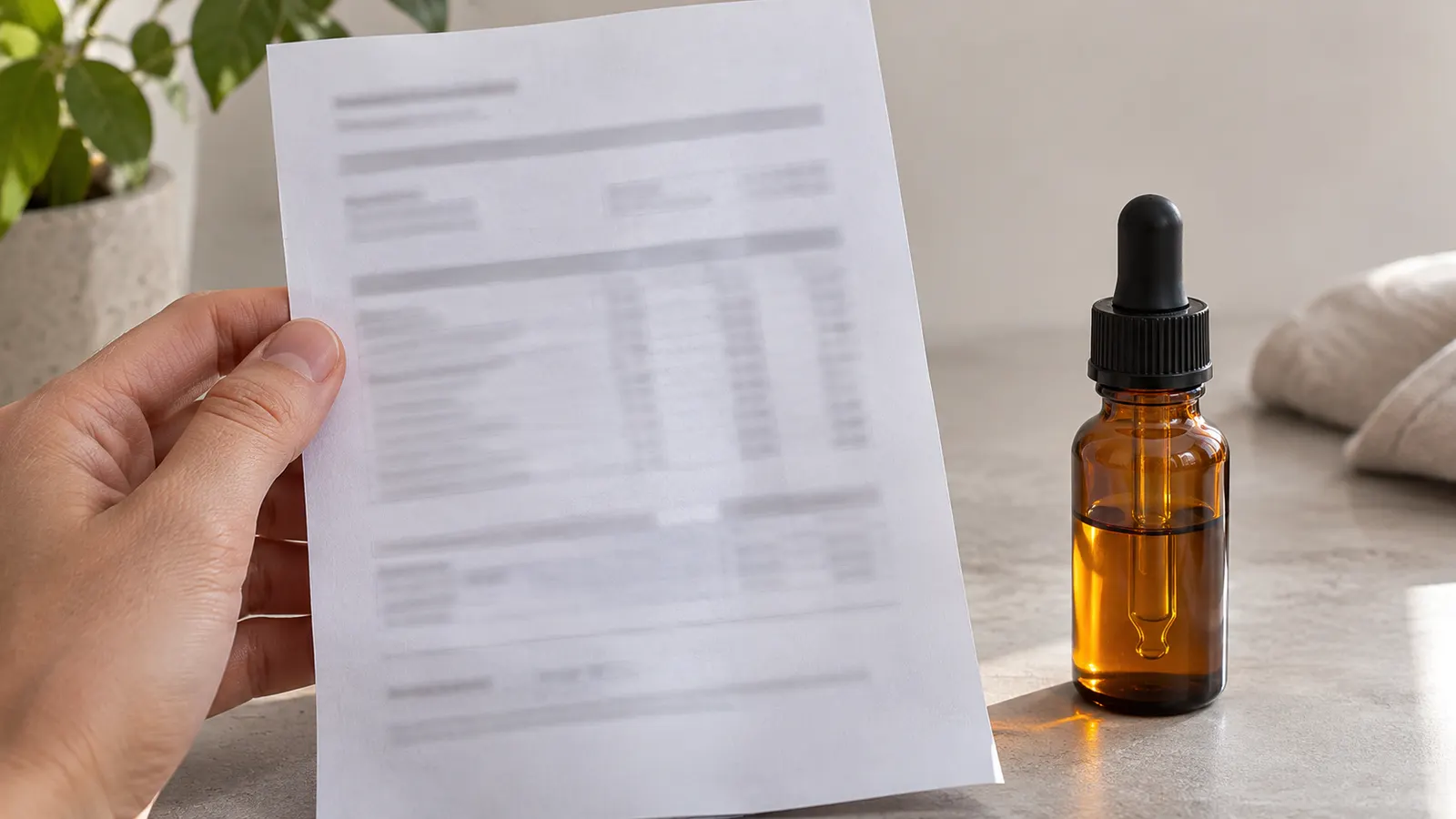
- Ask for the certificate of analysis. A real report comes from an independent lab, names the batch number on your bottle and lists THC with a detection limit. "Not detected" is what you want to see.
- Skip full-spectrum products if your job, sport or probation involves testing.
- Be careful with high doses. Even a tiny THC fraction becomes a measurable amount when you take a lot of oil.
- Tell the tester. A medical review officer cannot excuse a positive result because of CBD use, but it helps to have your product and lab report ready if a result is questioned.
- Know your own rules. Some employers and sports bodies have zero tolerance for THC, whatever its source.
How to read a CBD lab report
A certificate of analysis is only useful if you know what to look for. These are the points that matter for a drug test:
- Batch number. It should match the number printed on your bottle. A report for a different batch tells you nothing about yours.
- Who did the test. Look for an independent lab with its name and contact details on the report, ideally one accredited for cannabinoid testing. A report on the seller's own letterhead is weaker evidence.
- Delta-9 THC. You want "ND" (not detected) or a value below the limit of quantification. Note the limit itself; a lab that can only measure down to a relatively high level may miss small amounts.
- Other THC forms. Some reports list THCA and delta-8 THC separately. Both can contribute to a positive result.
- Date. A report from years ago does not prove much about a bottle bought today.
A brand that will not share this report leaves you no way to check the THC content.
What if you test positive after using CBD?
A first screening result is not the end of the story. In regulated workplace programmes a positive screen is normally confirmed with a more precise lab method, and the result is reviewed before it reaches your employer. Be honest about the products you used and keep the bottle and its lab report. That said, if the confirmation test finds the THC metabolite above the cutoff, CBD use is not accepted as an excuse in most testing programmes. The test measured real THC, even if you never meant to take it.
Topical creams are a different matter, since usually very little of what you rub on your skin reaches the bloodstream. We covered that separately in does CBD cream show in a drug test.
Making your own CBD oil
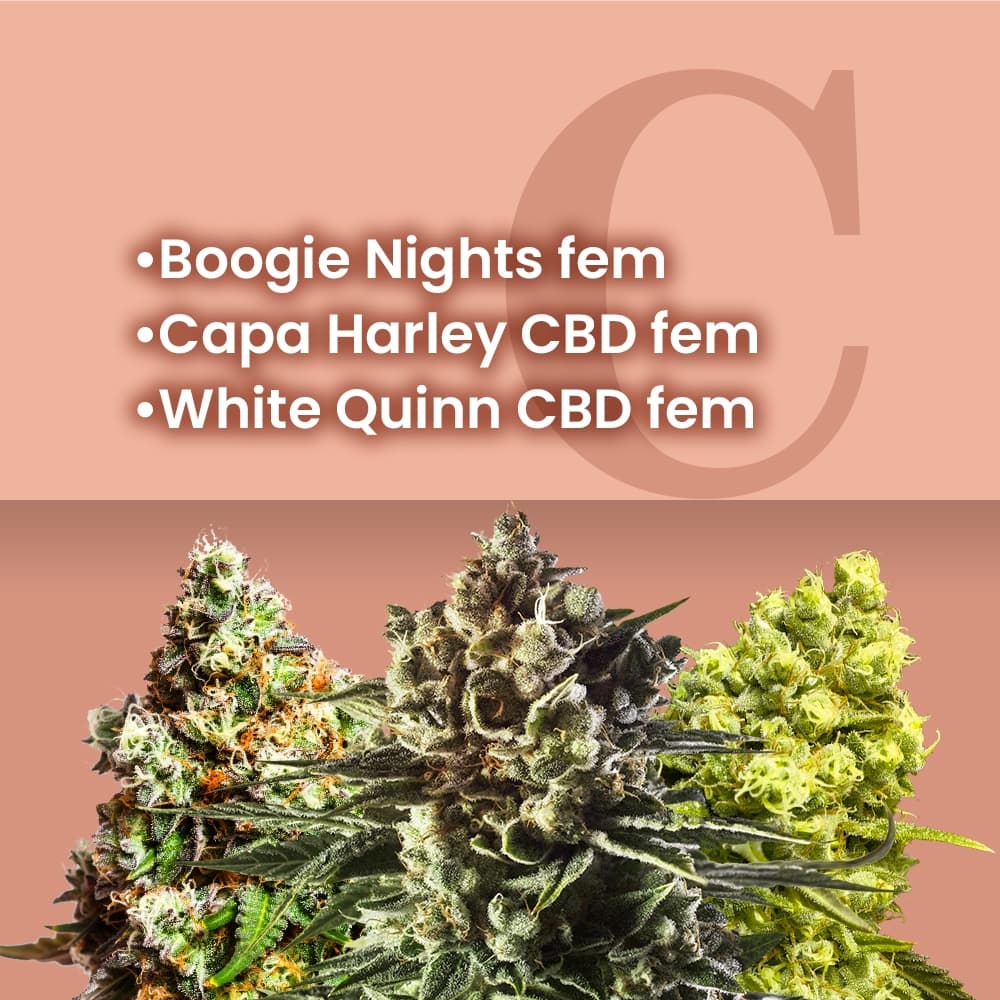
Some people grow a high-CBD strain and make their own oil. That gives you control over the plant, but not over the THC content, because even high-CBD strains produce some THC and home extraction does not separate the two. We see this in our own catalogue too: CBDoc Feminized is bred for high CBD and still lists THC up to 10%, and Limoncello Kush CBD lists up to 0.2%. Home-made oil behaves like a full-spectrum product. If you get tested, do not count on it being test-safe. If you are curious about the process anyway, our guide on making CBD oil at home walks through it, and the best CBD strains lists the genetics people use.
Frequently asked questions
Will CBD oil show up on a drug test?
CBD itself does not, because standard tests look for a THC metabolite. A CBD oil that contains THC, whether by design or by mistake, can lead to a positive result, especially with daily use.
Will CBD hemp oil show up on a drug test?
The same logic applies. A hemp extract with THC in it carries a risk; hemp seed oil used for cooking contains very little cannabinoid and is not a realistic cause of a positive test.
Can a full-spectrum CBD oil under 0.3% THC make me fail?
Yes. In the JAMA Psychiatry trial, half of the participants using an oil with about 0.02% THC tested positive after four weeks of daily use.
Is CBD banned in sport?
CBD has not been on the WADA prohibited list since 2018. THC still is in competition, so an oil that contains THC remains a risk for athletes.
Do drug tests check for CBD at all?
Standard workplace panels do not. Specialised tests for CBD exist, but they are not part of a normal drug screen.
How long before a test should I stop taking full-spectrum CBD oil?
Nobody can give you a safe number, because it depends on dose, frequency and your body. If a test matters, the cautious route is to switch to a verified THC-free product well in advance, or stop altogether.
The bottom line
A drug test is a THC test. Pure CBD will almost never trigger it, while full-spectrum oils and mislabelled products can. If you get tested, buy isolate or broad-spectrum CBD with a lab report that matches your batch, and treat any product without one as if it contains THC.
If you would rather grow your own high-CBD plants for personal use where that is legal, our high-CBD seeds are a good place to start.