Ants on Weed Plants: Are They Bad? How to Remove Them
Ants in a cannabis garden are rarely the real problem. They show up because something else is feeding them, and in almost every case that something is a sap-sucking pest such as aphids. Treat the ants alone and the infestation comes back. Here is how to read the situation and which fixes hold up.
Why ants walk up your plants
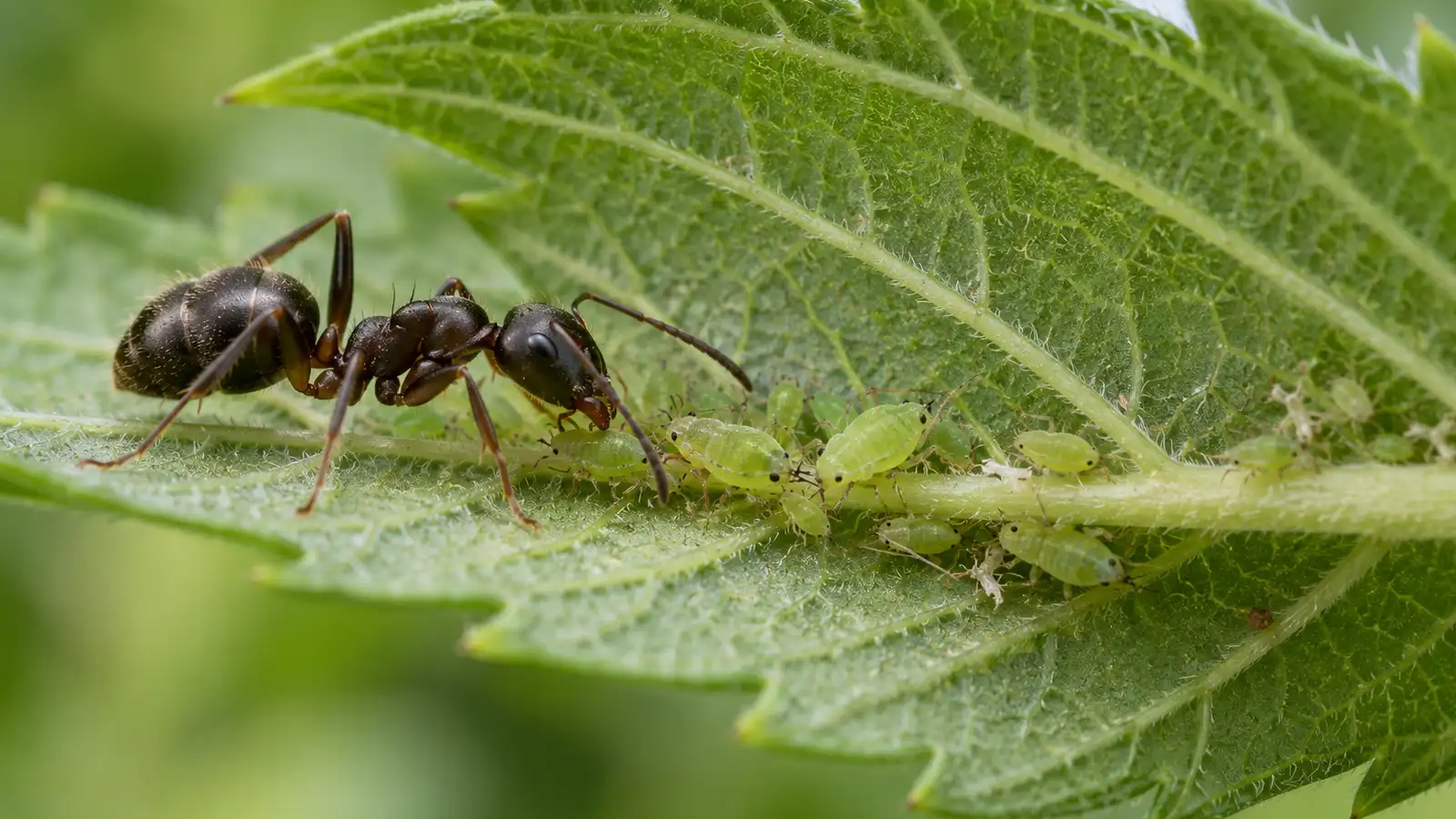
Aphids and soft scale insects excrete honeydew, a sugary liquid, and ants collect it. To keep that food source, ants guard these pests from ladybugs, lacewings and parasitic wasps. University of California extension guidance describes this as ants protecting honeydew-producing insects from their natural enemies. That is why a few ants on a stem are worth a closer look: turn over a leaf and check for clusters of small green, black or brown insects, sticky leaf surfaces or a black sooty film on the leaves.
Ants themselves do not eat cannabis leaves, so their direct damage is limited. The harm comes from the pests they shelter. Aphids weaken the plant by draining sap, and ants nesting in a pot can also disturb the root zone. If the aphids sit on the roots, our guide on root aphids explains how to spot and treat them.
Step 1: find out what the ants are feeding on
Follow the ant trail. Check stems, leaf undersides and the top of the soil. If you find aphids, deal with them first, because ants will keep returning for as long as there is honeydew. If you find no pests at all, the ants may simply be nesting in warm, moist soil, which is common with outdoor pots and raised beds.
Step 2: break the ants' route to the plant
- Sticky barrier. Wrap a band of sticky barrier product around the base of the stem or the legs of the plant stand. UC guidance recommends sticky bands for keeping ants out of trees, with one caveat: debris and dust can bridge the barrier, so check it regularly. In a pot, keep leaves and side branches from touching the wall or the floor, because ants will use them as a bridge.
- Water moat. For indoor pots, stand the pot on a support inside a tray of water so ants cannot walk across. Change the water often so it does not turn into a fungus gnat nursery.
- Move the nest. If ants nest in the pot, a soak in a bucket of water for a while often makes them leave. Repot into fresh soil if the colony is large.
Step 3: remove the aphids
A strong spray of water knocks aphids off the leaves. Wipe off the rest by hand, or use insecticidal soap on the foliage. Once the ants lose their honeydew and their guard job, the beneficial insects can do their work again. Releasing ladybugs works best once the ants are blocked, since ants can drive them off.
What about cinnamon and neem oil?
Ground cinnamon and neem oil are the two remedies you will see everywhere. Ground cinnamon can make ants avoid the spot where you sprinkle it, but we are not aware of a university trial showing that it solves an infestation, and it washes away or gets damp quickly. Treat it as a short-term deterrent on the soil surface, not a cure.
Neem oil is a different case. It works on soft-bodied pests such as aphids, but it leaves an oily residue. Keep it for the vegetative stage and do not spray it onto flowers. Cannabis growers report that it can make buds taste harsh when used late in flowering, and we are not aware of a university study on neem residue in cannabis meant to be smoked. If aphids appear in bloom, use water and manual removal instead.
Skip the strong chemicals
Insecticides that are not meant for plants you consume leave residue in the bud. Ant baits are a different matter: the ants carry the bait back to the nest, so it works away from the plant. If you use one, put it on the ground well away from the pots and never on the soil of a plant you will smoke.
Keep ants away for good
- Check the undersides of leaves every few days, at least during the first weeks of growth.
- Do not let spilled nutrient solution or sugary leftovers sit around the grow area.
- Keep the plants a little apart so pests cannot hop from one canopy to the next.
Starting with clean soil and clean plants helps, since pests that arrive in old soil or on transplants often bring ants with them.