Organic Fertilizer for Autoflowers: What Works and When
There is no single best organic fertilizer for autoflowers. What works is a mix: a living soil with compost or worm castings as the base, plus slow sources of phosphorus and potassium such as bone meal, bat guano or kelp, mixed in before you plant. The timing matters more than the brand or the exact recipe, because most organic fertilizers take weeks to months to become available, and an autoflower does not wait.
Below we go through the common organic feeds one by one: what each one actually supplies, how fast it works and where it can go wrong. We also give our view at the end, because "organic" is not automatically "better".
Why timing is the whole game with autoflowers
Autoflowers start flowering by age, not by day length. That makes them quick. In our catalog, White Widow XTRM Autoflower is listed with a flowering time of 6 to 10 weeks, and the plant's whole life is short too. There is little time to fix a hungry plant halfway.
Organic fertilizers do not feed the plant directly. The proteins and other compounds in them first have to be broken down by soil microbes. Clemson University's extension service explains that this speed depends on temperature, moisture and pH, and that most organic fertilizers take between one and four months to become available to the plant (Clemson HGIC, Understanding Organic Fertility).
Put those two facts side by side and the practical rule follows. With an autoflower, the slow organic material has to be in the soil from the start, ideally mixed in a few weeks before you sow. Sprinkling bone meal on top when the plant is already in flower is mostly too late. Fast liquid feeds, such as kelp, can fill gaps later on.
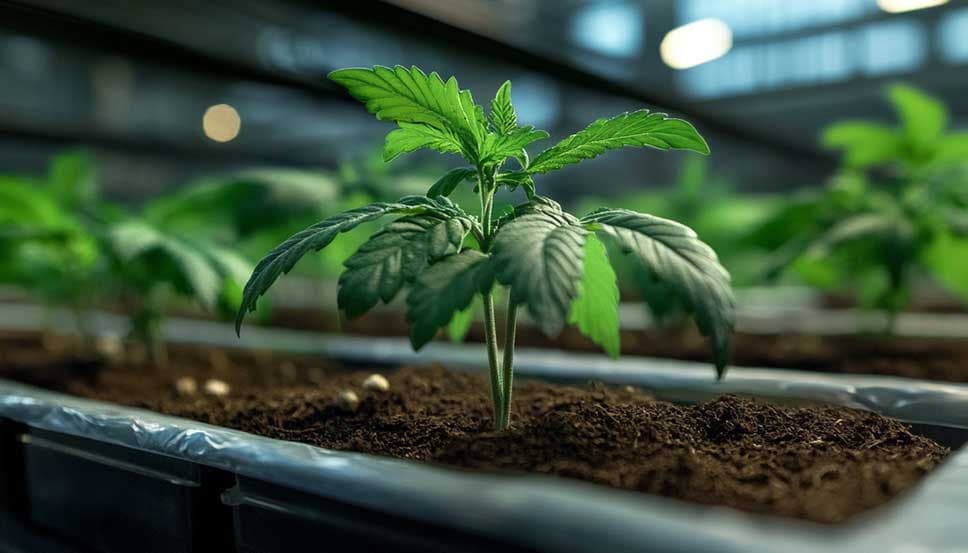
Autoflowers are also easy to overfeed when small. A seedling in a pot of rich soil can burn where the same plant a few weeks later would be fine. If you are unsure, start milder and add more.
The common organic feeds and what they do
The nutrient figures below are typical values from Clemson's extension tables, given as N-P-K (nitrogen, phosphate, potash). Real values vary from bag to bag and batch to batch, so read the label of what you buy.
Compost
Good, mature compost is the base of most organic grows. It adds organic matter, holds water and air, and carries the microbes that break the other feeds down. Its nutrient content is low and varies a lot, so think of it as the engine of the soil rather than the fuel. Colorado State University's extension notes that compost and manure usually add only small amounts of nutrients and do not meet the legal definition of a fertilizer, but that organic material can improve soil properties (CSU Extension, Organic Fertilizers).
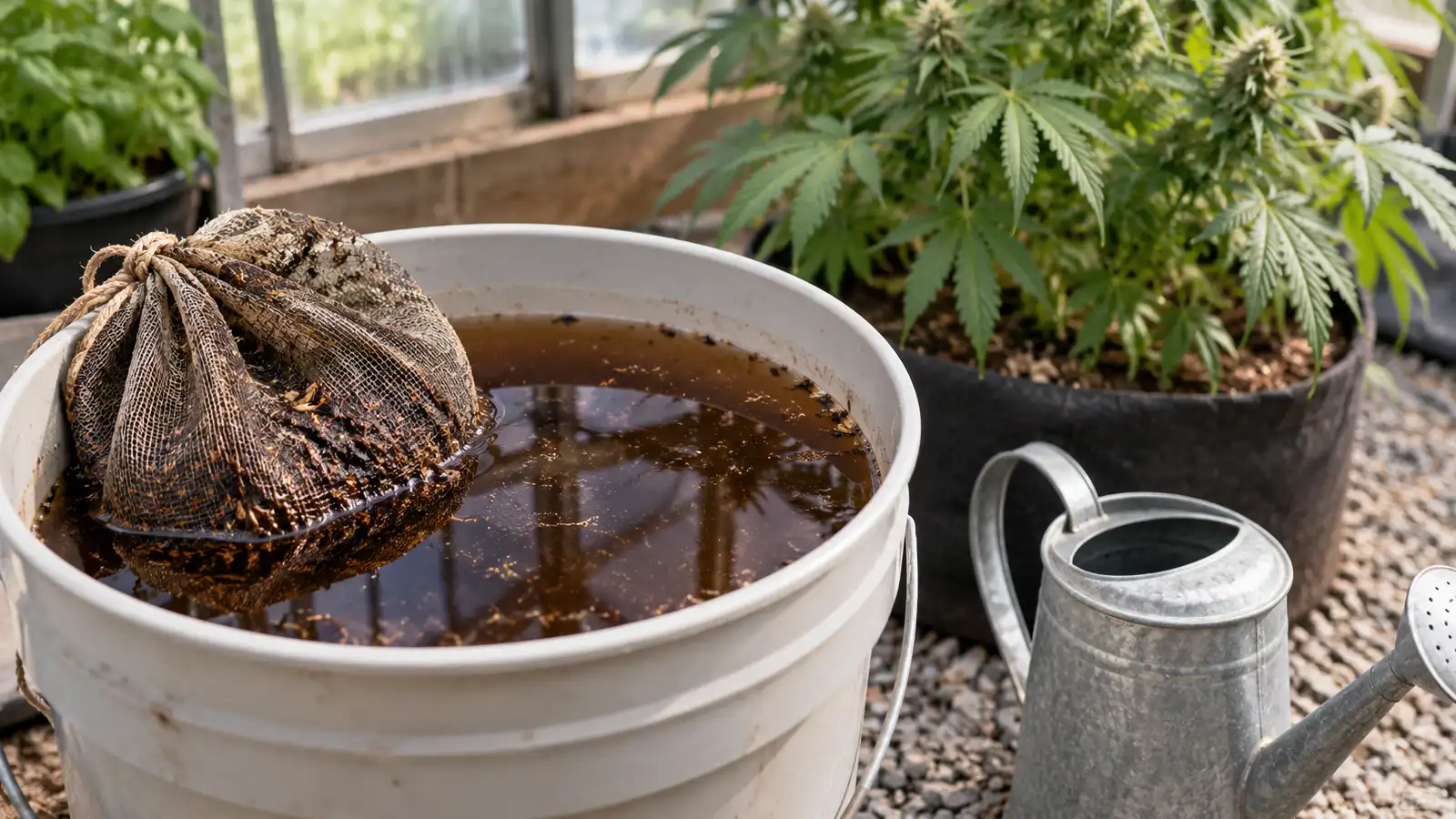
Some growers also soak compost in water to make a liquid "compost tea" and water their plants with it. It brings the same microbes in liquid form; how much it adds in nutrients depends entirely on the compost you start with.
Worm castings
Worm castings (vermicompost) are compost made by worms. Clemson lists them at about 2-1.5-1.5, with nutrients released over one to four months. That is mild, which is exactly why growers like them for autoflowers: you can mix a fair share into the soil without much risk of burning a young plant. What the worms ate decides what is in the castings, so quality differs between suppliers.
Bat guano
Bat guano comes in two kinds. Clemson lists high-nitrogen guano at about 10-3-1 and high-phosphorus guano at about 3-10-1, both with a release time of four months or more. The phosphorus type is the one sold as a flowering feed. With that release time, it belongs in the soil mix before planting, not in the last weeks of flower.
One safety point: the fungus that causes histoplasmosis spreads in bird and bat droppings mixed into soil, and people get infected by breathing in the spores (CDC, About Histoplasmosis). Bagged guano is usually dried and processed, but we would still mix dry guano outside or wear a dust mask, and keep the dust down.
Bone meal
Bone meal is mainly a phosphorus source. Clemson lists raw bone meal at about 3-22-0, released over one to four months. There is a catch many growers miss: Colorado State University's extension says that phosphorus from bone meal is only available to plants in soils with a pH below 7.0. In a slightly acidic cannabis soil it can work, in chalky or limed soil much less so.
Kelp
Kelp (seaweed) is mainly a source of potassium. Clemson lists kelp powder at about 1-0-4 and puts its release at immediate to one month, which makes it one of the few organic feeds fast enough to correct something during an autoflower's short life. It is used both mixed into soil and as a liquid feed.
Manure
Animal manures vary more than any other organic feed. Clemson's table shows chicken (poultry) manure as much richer in nitrogen than horse or cow manure, and advises a lab analysis before use because manures are so variable. Sheep, rabbit, horse and steer manure are all used by growers, but the same rule applies to every one: compost it first.
Fresh manure can contain bacteria that cause human disease. The University of Wisconsin extension says proper composting kills them only if the pile gets hot enough, that simply storing manure in a heap is not a reliable way to do it, and that pet waste should not be used at all (UW-Madison Extension, Safely Using Manure in the Garden). Their advice is written for vegetable gardens, but the hygiene logic is the same when you handle the soil and the plants by hand.
Super soil
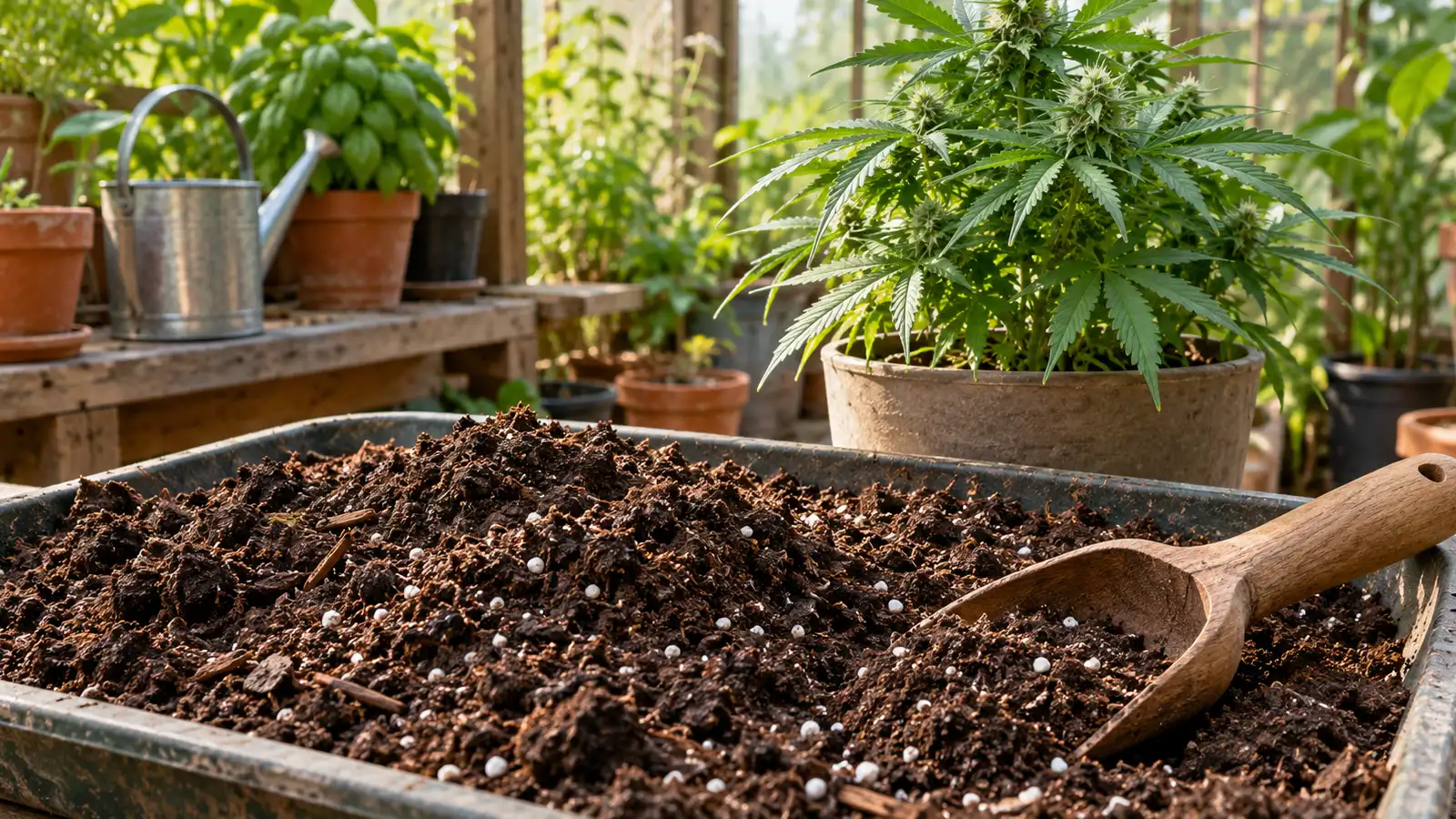
Super soil is not one product but a grower's method: a base mix (peat or coco, compost, worm castings, perlite for air) loaded with slow feeds such as guano, bone meal and kelp, then left to "cook" for a few weeks so the microbes can start working. The idea fits autoflowers well, because everything the plant needs is in place before it is sown. Recipes differ a lot and we know of no solid research comparing them for cannabis, so we do not give fixed percentages here. If you try it, keep the top layer and seedling spot lighter, and let the roots grow into the rich part. Our guide on the best soil for autoflowers covers the base mix in more detail.
What research on organic feeding of cannabis shows
Hard data on organic feeding of cannabis is still thin. One of the first studies came from the University of Guelph in Canada, where Deron Caplan, Mike Dixon and Youbin Zheng tested several rates of a liquid organic fertilizer on cannabis in two coir-based mixes, published in HortScience in 2017 (University of Guelph news). HortiDaily's summary of their flowering-stage paper reports that more fertilizer gave more growth and yield but also lowered THC and some other cannabinoids in the dried flowers, and the best rate depended on the growing mix (HortiDaily summary).
Two lessons from that work hold for home growers. More feed is not simply better. And results change with the mix you grow in, so a recipe that worked for someone else is a starting point, not a guarantee. The pages we read do not say whether autoflowers were part of the study, so treat it as general cannabis data.
Organic or synthetic: our honest view
Organic feeding is more natural. It is not by definition better.
Plants do not take up "organic" nutrients as such. Microbes first have to convert the material into forms the roots can take up, as both Clemson and Colorado State describe. A synthetic feed supplies nutrients in such forms straight away. What organic material adds is a living soil with more organic matter, and slower, steadier release. What it costs you is control: you know less precisely what the plant gets and when, and with a short-lived autoflower that matters.
A few common claims we would not repeat:
- "Organic is always cheaper." Compost from your own heap is cheap. Bagged guano, bone meal and kelp often are not.
- "Organic is always safe." Uncomposted manure can carry disease-causing bacteria, and dry guano dust is a known exposure route for histoplasmosis.
- "Organic means bigger harvests." Genetics, light, pot size and climate do more for your harvest than whether the food came from a bag or a bottle.
Grow organic if you like how it works and enjoy building a soil. That is a good reason. Just do not expect the word "organic" to do the growing for you.
Picking an autoflower to grow organically
Autoflowers often do better in the north, where summers are short, because they finish without waiting for the days to shorten. For an organic outdoor grow in a cooler climate, that makes them a sensible choice, as long as the soil is ready before the seed goes in. For a feel of how plant type changes a grow, see our piece on indica vs sativa, and for the soil itself, the guide on what soil autoflowers need.
When your soil plan is ready, you can browse our autoflower weed seeds or the full range of the Amsterdam seed bank.