How to Dispose of Cannabis Waste from a Home Grow
Short answer for home growers: healthy leaves, stems and roots can go on your compost heap or in the green waste bin, as long as nobody can pick usable flower out of it. Sick or pest-ridden plants, rockwool and leftover nutrients each need a different route. The exact rules on waste depend on where you live, so the last word always belongs to your local council or municipality.
Why this question comes up at all
A lot of what you find online about cannabis waste comes from the United States, much of it from California. Those texts talk about licensing bodies such as CalCannabis, the Manufactured Cannabis Safety Branch and the Bureau of Cannabis Control, waste management plans, approved haulers and making waste "unusable and unrecognizable" before it leaves the premises. Many of those articles are also out of date: in 2021 California moved its cannabis licensing, including the CalCannabis Cultivation Licensing Division, into a single new Department of Cannabis Control (California Department of Food and Agriculture, June 2021). And all of it is written for licensed cannabis companies. It says little about a grower with three plants on a balcony in Spain or a tent in a spare room in Germany.
The idea behind those rules still makes sense at home, though. Waste should not tempt anyone to dig through your bin or smell up the street, and it should not put chemicals where they don't belong.
Leaves, stems, stalks and roots
This is the bulk of what a harvest leaves behind. Fan leaves, the woody main stem, side branches and the root ball are plain plant material. In our own grow rooms this goes the same way as any garden waste.
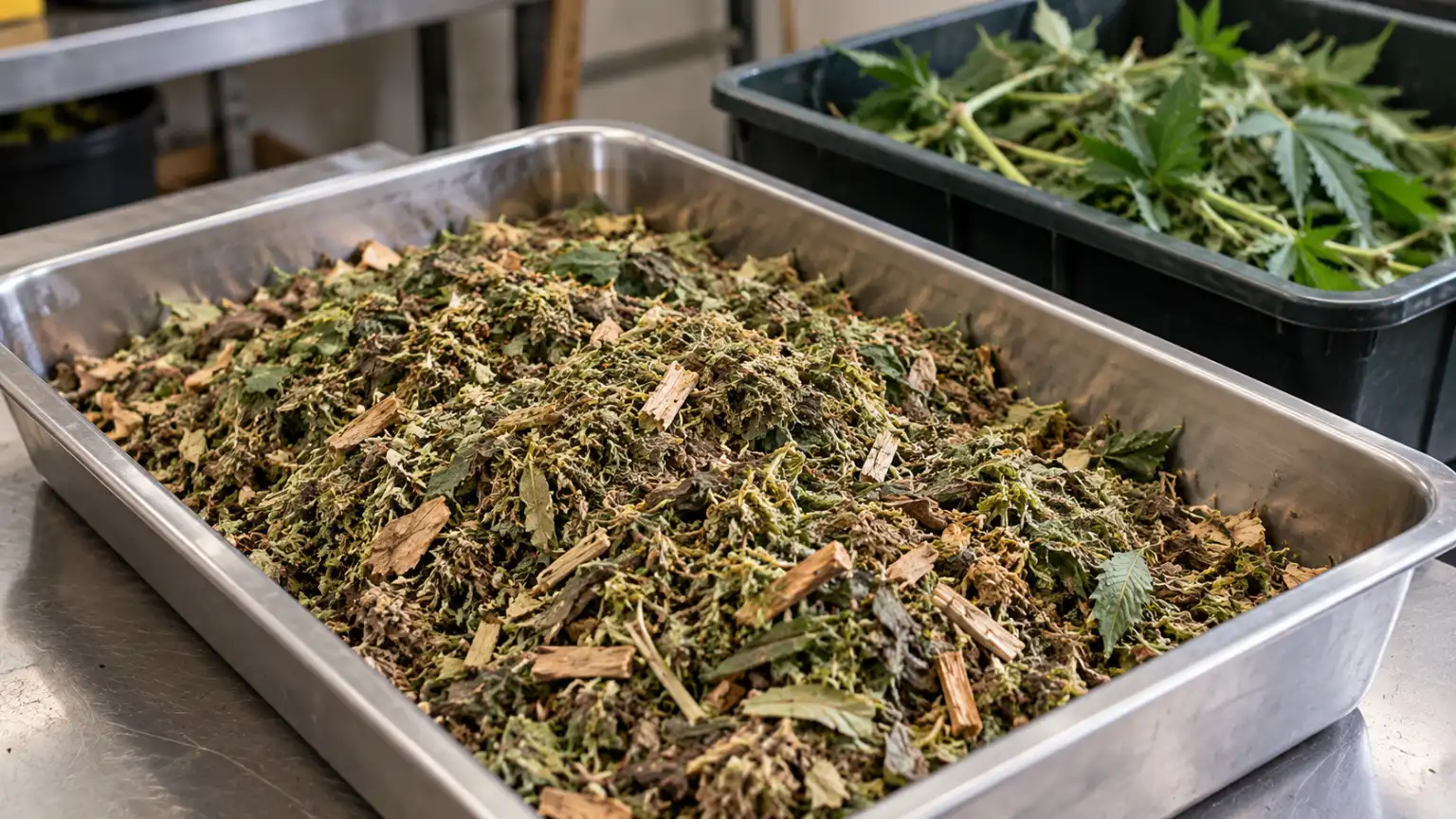
- Compost it. Chop stems into short pieces first. A thick cannabis stalk is fibrous and takes a long time to break down whole.
- Mix it. Bury fresh green leaves in the middle of the heap with dry material such as dry leaves or untreated wood chips. The US Environmental Protection Agency lists grass clippings, dry leaves and untreated wood chips among the things that belong in a home compost pile (EPA, Composting at Home).
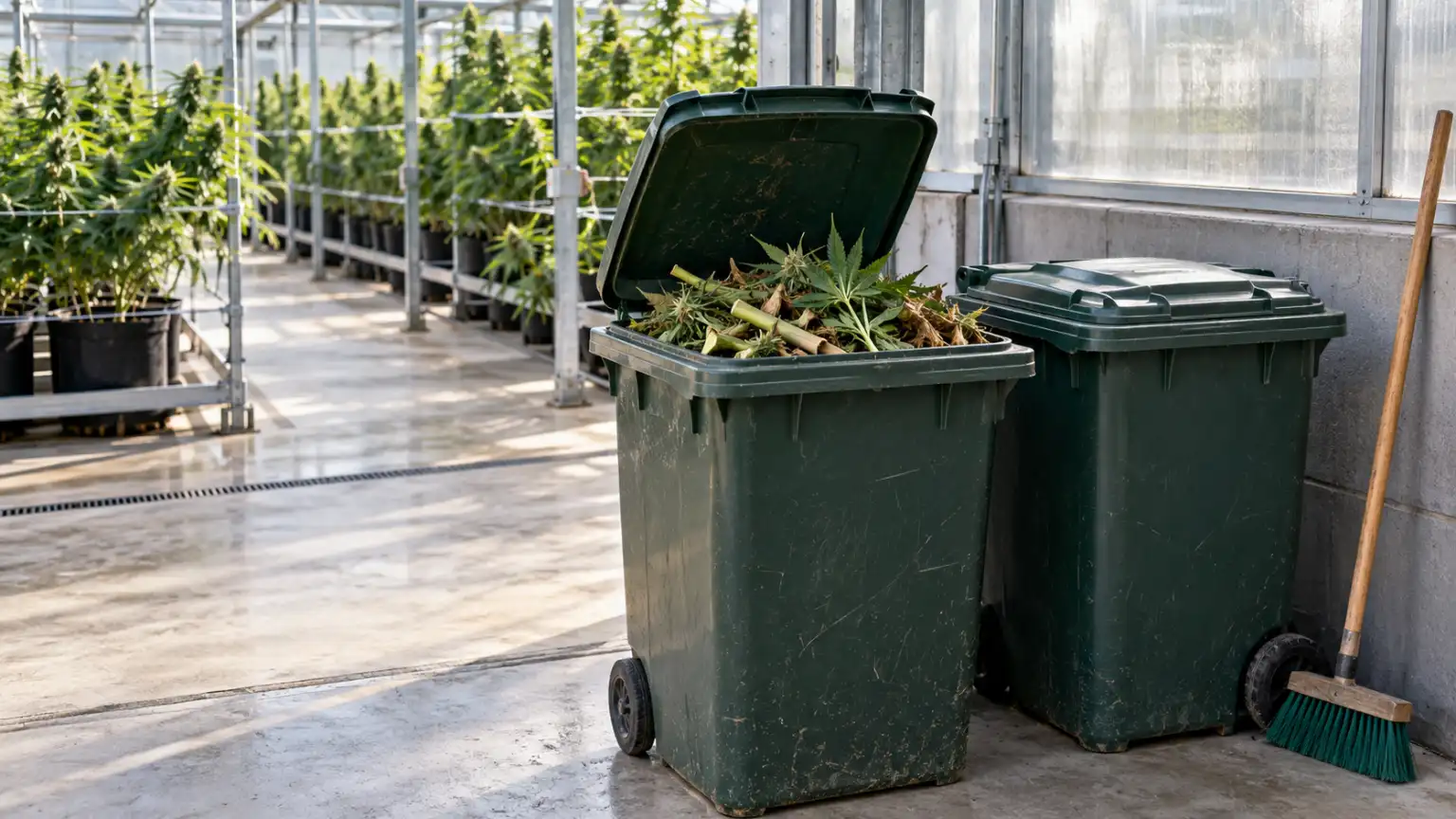
- Green bin. If you have no compost heap, the municipal green or organic waste bin is the usual place for plant material. Whether cannabis plant material is accepted there is a local rule, so check your council's waste guide.
What we see go wrong most often is not the leaves, but the trim. Sugar leaves and small popcorn buds still carry resin. Leave them lying on top of a bin and you invite questions from neighbors, or a curious teenager. Use trim for hash or butter, or mix it well into the compost so it is no longer worth picking out. That is the home version of the "unusable and unrecognizable" rule the licensed industry works with.
In regions with strict cannabis laws, keep in mind that a bin full of recognizable plants can draw attention. If home growing is not legal where you live, the waste is part of the same legal risk as the plants.
Sick plants and pests
A plant with bud rot, powdery mildew or a heavy spider mite problem does not go on the compost heap. The EPA list of things to keep out of home compost includes "diseased and pest-infested plants" and herbicide-treated plants (EPA, Composting at Home). The same page explains that high temperatures help reduce pathogens and weed seeds. A small home heap often does not get that hot, so mold spores and pests can survive and come back with next year's soil.
We bag infected material straight away, inside the grow room, and put it out with household (residual) waste. Bag it before you start shaking branches around, or you spread the spores through the rest of the room.
The same goes for plants you sprayed with chemical pesticides. Waste with pesticide residue does not belong in compost you will later use to grow food or new plants.
Used soil and coco
Old potting soil is not really waste. After a grow it is tired, low in nutrients and full of old roots, but it still has structure. Pick out the large roots, mix the soil into the compost heap or into garden beds, and it will be useful again.
Two exceptions. Soil from a pot where the plant had root rot, fungus gnats or another soil-borne problem goes out with the residual waste, for the same reason as sick plants. And soil that had a lot of mineral nutrients pushed through it is better spread thin in the garden than reused straight for seedlings.
Coco coir works much the same way. Spent coco can go into the compost or the garden, mixed with other material.
Rockwool
Rockwool is made from spun rock fibers, not plant matter. It does not rot in a compost heap, and it does not belong in the green bin. Pull the roots out as well as you can and ask your municipality where mineral wool should go; some treat it as residual waste, others want it at the recycling center. Wet rockwool is also heavy, so let it dry before bagging it.
If you grow a few plants at home and the waste bothers you, this is one of the reasons some small growers move to soil or coco.
Nutrients and runoff water
Runoff is the water that drains out of the bottom of the pot. From plants in soil it usually carries only a little nutrient and is fine to pour over the garden or an ornamental bed, spread out rather than in one spot.
Leftover concentrated nutrients are a different matter. Do not pour bottles of fertilizer, pH down or pH up into a ditch, a pond or a storm drain. The easiest route is to not end up with leftovers: mix only what you need for one feeding. Half-full bottles you no longer use go to your municipality's collection point for household chemicals. What counts as chemical waste is set locally, so check before you go.
A word on organic feeds: they are more natural, but not by definition better, and leftovers still should not go into surface water.
Packaging and old seeds
Seed packs, plastic pots, plant labels and nutrient bottles go with the normal sorted household waste. Rinse bottles first. Old seeds you will not use can go in the compost. Crush them first so they cannot sprout, and do not throw them in a field or a park.
Licensed growers are a different story
If you grow commercially under a license, your waste rules are set by that license and by the authority that issued it. In California, for example, they now come from the Department of Cannabis Control, with local rules from your county or city and its local enforcement agency on top. They are detailed: storage, waste haulers, logs and making waste unrecognizable. Those rules change, so read the current text from your own licensing authority and not a summary in a seed bank's blog.
Our own rule of thumb
The people behind AMS have grown, bred and smoked for decades, some for close to 40 years. The habit that saves the most trouble is boring: clear up waste the day you harvest. Fresh trim on the floor of a tent can grow mold within days, and a bin full of smelly stems on the balcony is how neighbors find out what you grow. Chop, compost or bag, and the problem is gone.
For more on growing at home, browse the guides in our marijuana growing section or the rest of the AMS blog.