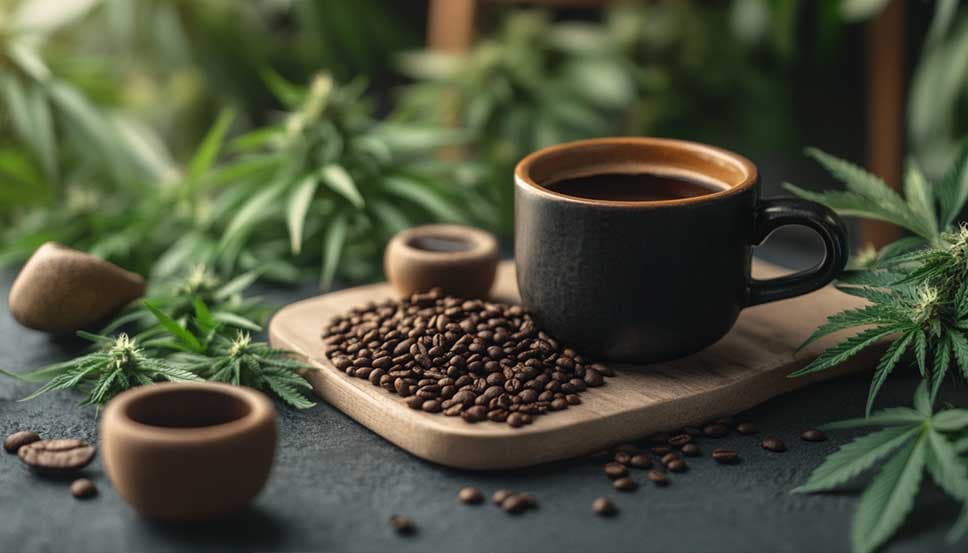
Coffee Grounds for Cannabis: Compost Yes, Fertilizer No
Can you use coffee grounds (or "grinds", as some growers say) for cannabis? Yes, but mainly as compost material, not as a fertilizer and not straight onto the soil around your plants. Used grounds are close to pH neutral, they hold only a little nitrogen, and in a university trial spent grounds dug into garden soil made plants grow worse. Composted in moderation, they are a decent free ingredient. We found no published trial on cannabis itself, so everything below comes from research on vegetables and garden plants, plus our own view as growers.
The short version
- Compost them first. Keep grounds to no more than 20% of the volume of your compost pile.
- Do not count on them to lower pH. Brewed grounds sit around pH 6.5 to 6.8.
- They are not a nitrogen feed. Fresh grounds can even take nitrogen away from your plants for a while.
- Never pile them on thick around a cannabis plant, in a pot or in the ground.
Are coffee grounds acidic?
This is a common myth. Unbrewed coffee is acidic, but used grounds are not. Oregon State University Extension puts used grounds at "around pH 6.5 to 6.8" and says any effect on soil pH is temporary (Oregon State University Extension, January 2025). So if your soil pH is off, coffee grounds will not fix it. Measure the pH of your water and runoff instead, and correct it there. Our guide to the nutrients cannabis needs and when explains why pH matters for nutrient uptake.
Do coffee grounds feed cannabis with nitrogen?
Only a little, and not right away. The same OSU article says grounds contain 1% to 2% nitrogen and "aren't a major source of plant nutrition." While fresh grounds break down, soil microbes use nitrogen to grow and "temporarily tie up" what is in the soil. For a hungry cannabis plant in veg, that is the opposite of what you want. You will read online that coffee also supplies magnesium and potassium. OSU only says the grounds add some micronutrients, so do not plan your feeding around them.
Nitrogen does matter for green, healthy leaves (more on that in our article on photosynthesis and overall plant health). Get it from a proper feed or a finished compost, not from a layer of coffee.
Why you should not put fresh grounds straight on the soil
In a 2016 study, researchers Hardgrove and Livesley grew broccoli, leek, radish, viola and sunflower in three soil types with and without spent coffee grounds. A University of California Agriculture and Natural Resources summary of that study says "all of the plants grew poorly in response to the spent coffee grounds," whatever the soil type and whether fertilizer was added. Changes in pH and nitrogen did not explain it; the authors pointed to likely toxic effects on the plants (UC ANR, Under the Solano Sun, January 2019). OSU adds that too many grounds applied directly to soil "may inhibit seed germination or slow plant growth due to caffeine residues."
That growth-suppressing effect, sometimes called allelopathy, is the main reason we tell growers to keep grounds out of their seedling mix. None of these trials used cannabis. We do not know how sensitive cannabis is, and we would rather not find out on a plant you have spent weeks on.
Fine grounds also pack down. Spread thick on top of a pot, they can form a crust that sheds water and stays wet underneath. OSU advises covering any grounds used as mulch with leaves or bark so the surface does not dry out and repel water.
How to compost coffee grounds for cannabis
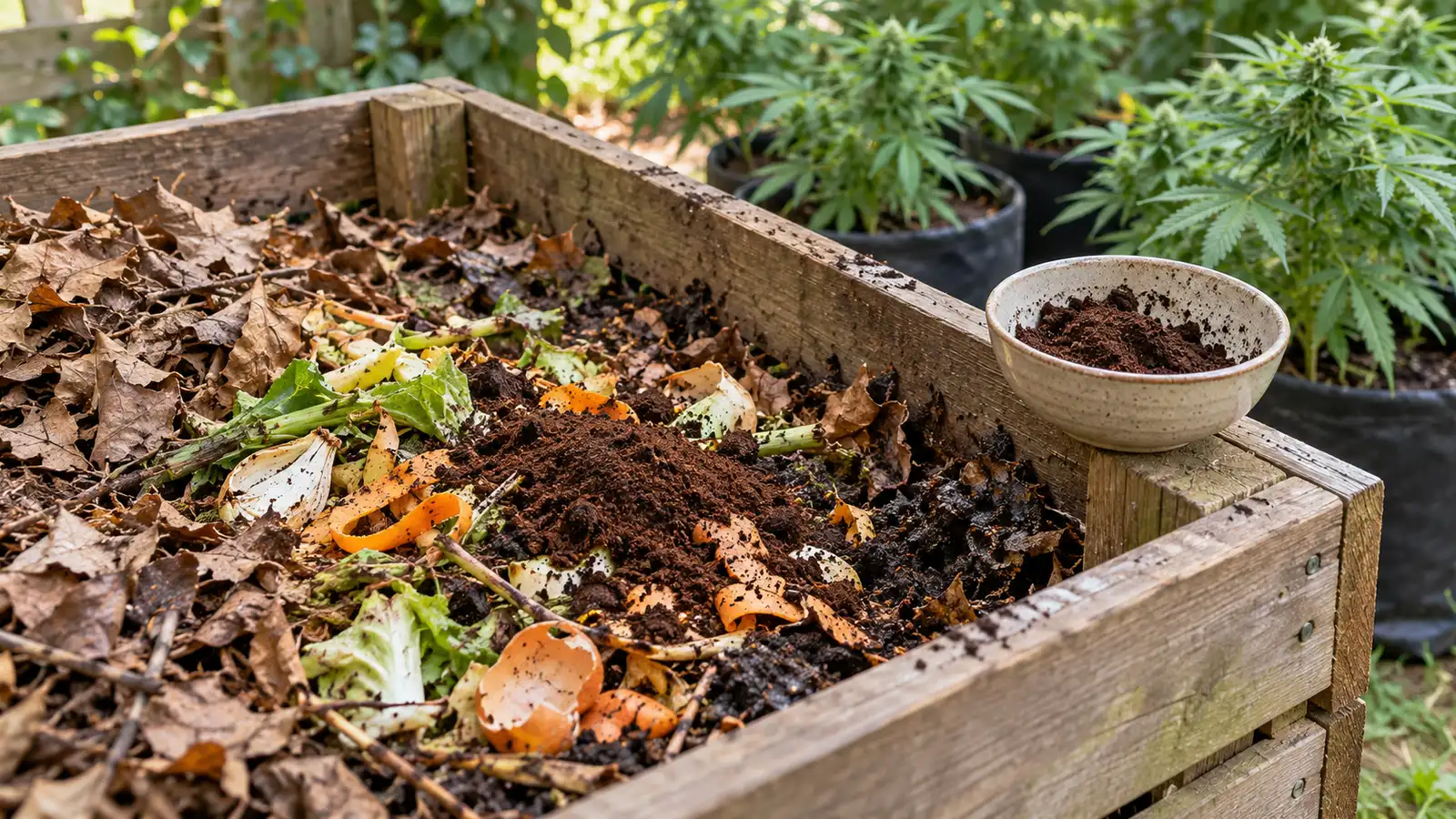
In a compost pile, grounds count as "green" material, the nitrogen side of the mix. OSU's guidance:
- Grounds make up no more than 20% of the pile's total volume. More "can be toxic to plants."
- A mix that works: three parts leaves to one part fresh grass clippings to one part coffee grounds, by volume.
- If you do work fresh grounds into a garden bed, use about half an inch mixed into the top 4 inches of soil, and add a nitrogen source such as composted manure.
Use the finished compost in your outdoor bed or soil mix the way you would any other compost. If you already brew compost tea, our guide on how to use compost tea for cannabis covers that route.
What about mold?
Grounds in a bin often grow white or green fuzz. OSU says this mold is harmless in compost and helps decomposition. On top of a pot it is another story. A damp, moldy layer at the stem is not something you want near a cannabis plant, especially indoors where air movement is limited. Keep grounds in the compost bin.
Worms like them
If you keep a worm bin, coffee grounds are a normal part of the food scraps. The EPA's guide to vermicomposting lists them alongside tea bags. Worm castings are a gentle, useful addition to a cannabis soil mix, so this is a good way to turn your coffee habit into something your plants can use.
Do coffee grounds stop pests or disease?
The evidence is thin. OSU reports that a caffeine solution of 1% to 2% used as a soil drench drove slugs away and killed them, but that is a concentrated caffeine solution, not a sprinkle of used grounds. You will read that grounds fight Pythium, Sclerotinia and Fusarium. We could not confirm that in an extension or university source we were able to read, so treat it as unproven, and do not rely on coffee grounds to protect cannabis from root rot or mold.
Our take
The people behind AMS have grown cannabis for a long time, some for close to 40 years. Organic inputs like compost are more natural, but that does not automatically make them better. Coffee grounds are a fine thing to add to a compost pile, and a poor thing to dump around a plant. If you want to try them, compost them first, keep the share small and watch how your plants respond. And grow with passion, not for the money: a free bag of grounds from the café will not make up for a plant that is short on light or root space.
If you are planning an organic or outdoor grow and still need genetics, the strains below are good places to start.