Cannabis Leaves: Fan vs Sugar Leaves and Leaf Problems
A cannabis plant has two kinds of leaves that matter to a grower. Fan leaves are the big, hand-shaped leaves that power the plant through photosynthesis. Sugar leaves are the small leaves that grow out of the buds and get coated in resin. Fan leaves also show trouble early: a change in their color or shape is usually the first sign that something is off with feeding, pH, water, light or heat.
This guide covers how a leaf is built, how to tell fan from sugar leaves, how to read leaf problems without jumping to conclusions, what defoliation does, and what to do with the trim.
How a cannabis leaf is built
The fan leaf everyone recognizes is a compound leaf: several narrow, serrated leaflets spreading out from one point at the end of a leaf stalk (the petiole).
Leaf shape also varies by genetics. Plants sold as indica often have broader leaflets, and sativas narrower ones. Most modern strains in our sativa and indica ranges are hybrids, though, so leaf shape is a rough hint at best, not a way to identify a strain.
Fan leaves and sugar leaves
Fan leaves grow from the main stem and branches. They are the plant's solar panels and carry little resin compared to the flowers.
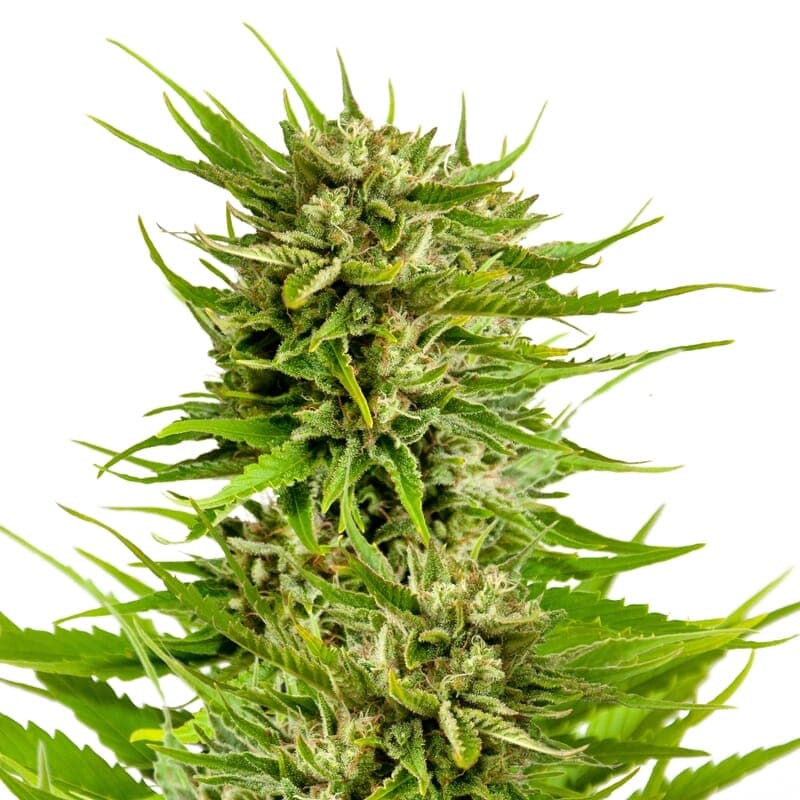
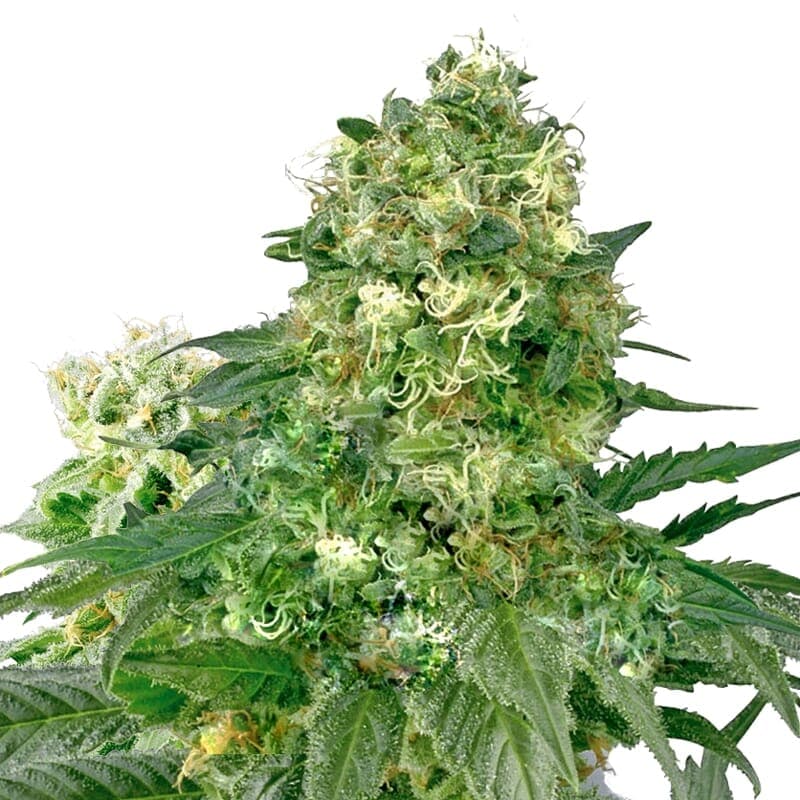
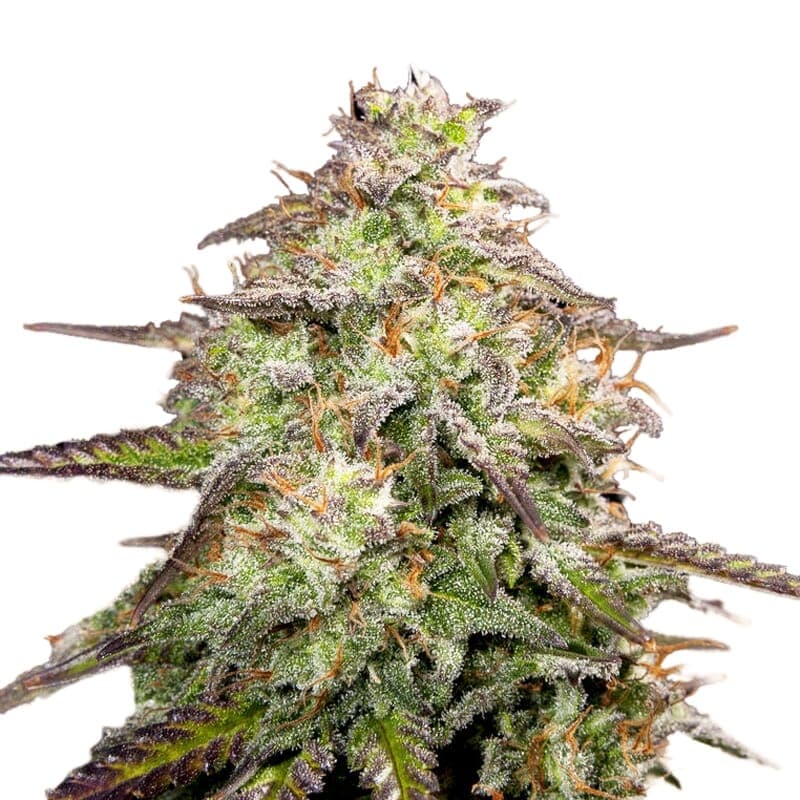
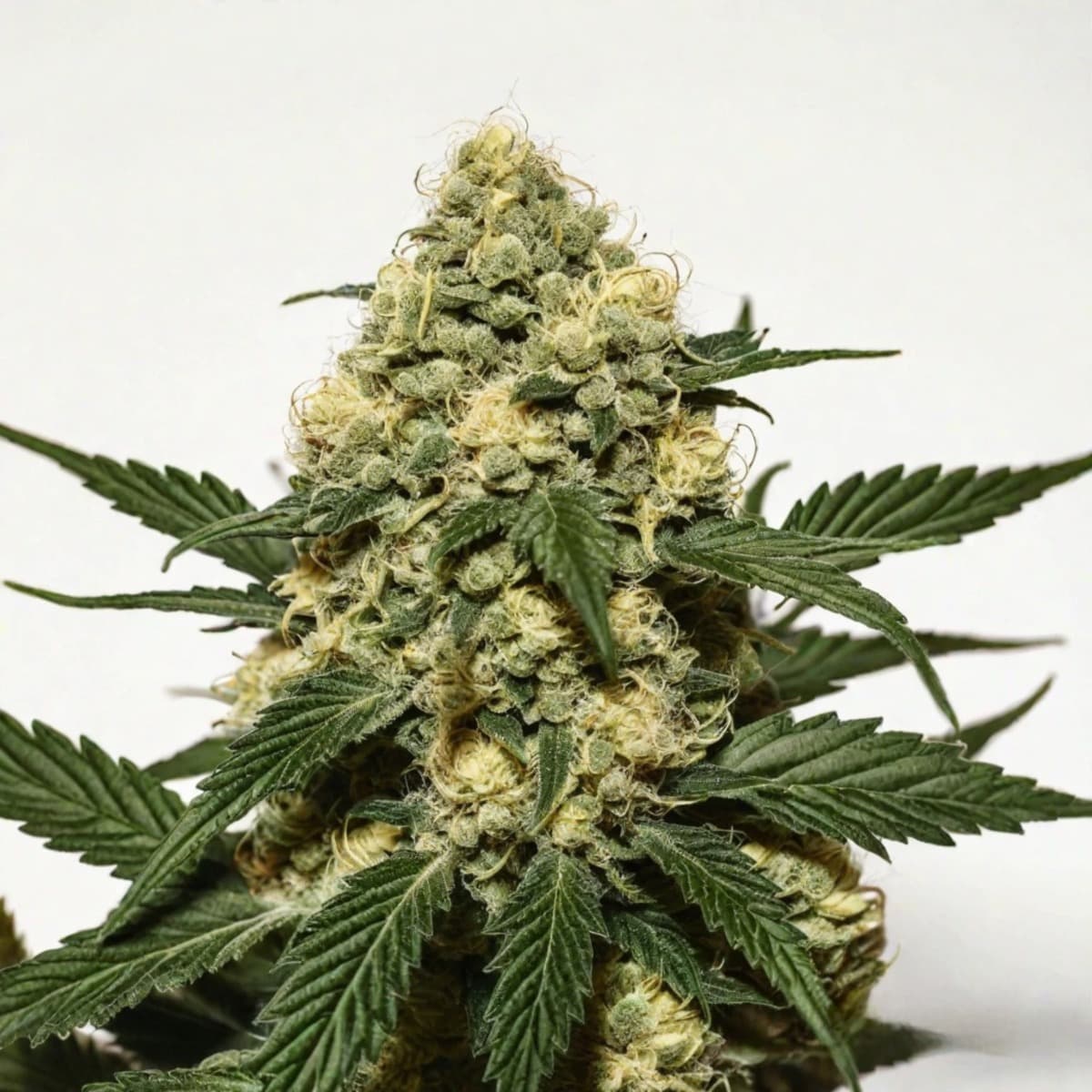
Sugar leaves are the small, single leaflets that poke out of the buds during flowering. They carry a dusting of trichomes, the resin glands that hold cannabinoids and terpenes, which is where the name comes from. They are cut off when you trim buds, and that trim is what growers keep for extracts, edibles or hash. Our guide to harvesting, drying, trimming and curing explains when and how to trim.
What your leaves are telling you
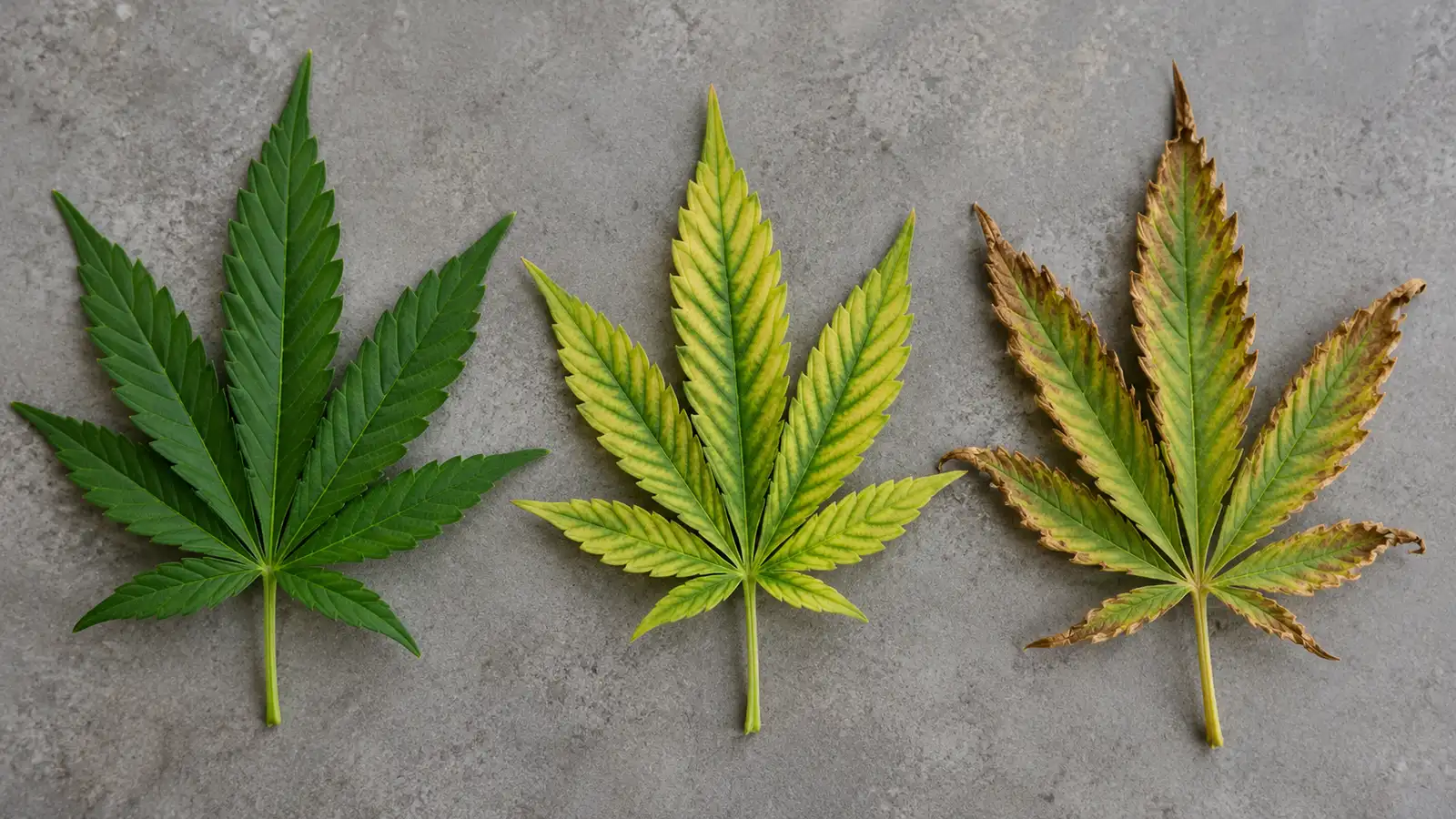
A healthy fan leaf is evenly green, firm and held out from the stem. Yellowing, spots, burnt tips, curling, clawing or drooping are all signals. The hard part is that very different causes can look alike. Before you buy a bottle of anything, work through the likely causes in order.
1. Where on the plant does it start?
This is the most useful clue. Plants can move some nutrients out of old leaves into new growth, and others they cannot. According to a University of Florida extension guide on plant nutrition, nitrogen, phosphorus, potassium, magnesium and sulfur are mobile, so a shortage shows up first in older leaves. Calcium, iron, zinc, copper, manganese, boron and molybdenum are immobile, so a shortage shows up first in new growth (Vashisth and Oswalt, UF/IFAS Extension, HS1373).
- Problems starting on older, lower leaves: think of a mobile nutrient. Our pages on nitrogen, potassium and magnesium show what each one looks like.
- Problems starting on the newest leaves at the top: think of an immobile nutrient. See our pages on calcium and iron.
2. Check pH before you blame the feed
A plant can sit in a pot full of nutrients and still go hungry if the pH is wrong. The UF/IFAS guide notes that at high soil pH most micronutrients bind to the soil and become unavailable, and at very low pH most macro- and secondary nutrients do. That is why a "deficiency" often turns out to be a pH problem or a nutrient lockout. Measure the pH of your water and runoff first. The right range depends on whether you grow in soil, coco or hydro; our page on pH when growing weed goes through it.
3. Rule out water, light and heat
Droopy, heavy leaves on a pot that is still wet usually point to overwatering, which can lead to root rot. If the damage is worst on the leaves closest to the lamp while lower leaves look fine, suspect light or heat rather than feeding. Our guide on light burn and heat stress shows what each looks like.
4. Don't trust a single picture
Researchers who starved hydroponic cannabis of one nutrient at a time found that the visual symptoms did not always match what was measured in the leaves, and advised growers to take an integrated approach to diagnosis (Llewellyn et al., 2023). In practice that means: look at where the problem started, check pH, think about water, light and heat, and change one thing at a time.
Yellow leaves at the end of flowering are normal
In the last weeks of flowering, the lower fan leaves often turn yellow and drop. As long as it happens late in the strain's flowering time and the buds keep developing, that is usually the plant drawing on its own reserves, not a problem. The same yellowing in the middle of the vegetative stage is worth investigating.
Defoliation: when to remove leaves
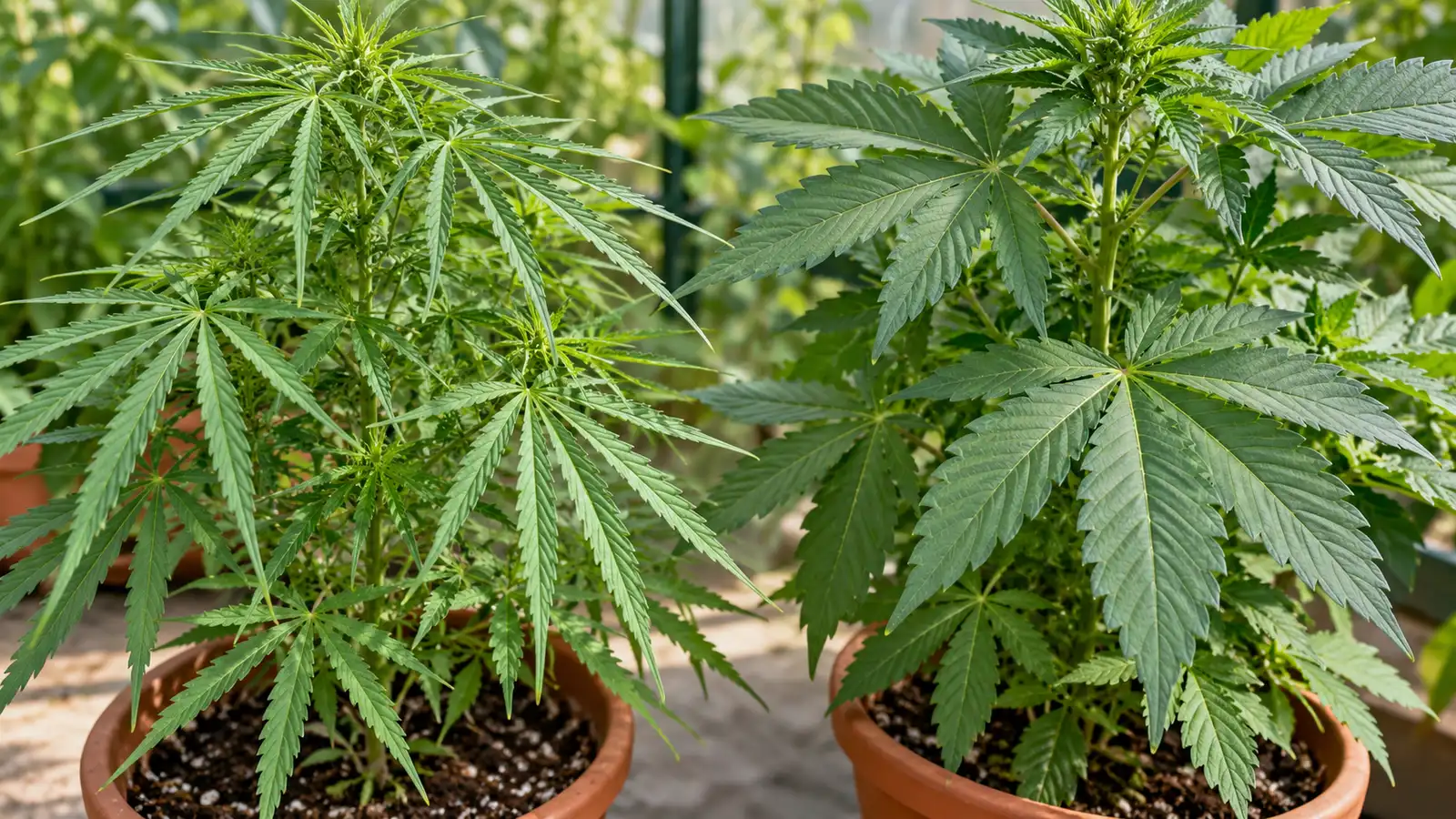
Defoliation means removing some fan leaves on purpose, usually to let light and air reach lower bud sites and to lower the risk of mold in a dense canopy. Light defoliation is a common indoor technique. It is not free, though. Fan leaves are what feed the plant.
The research on it is limited. One recent indoor study on two low-THC cultivars found that defoliation reduced plant height and floral biomass, while raising cannabinoid concentration in one of the two cultivars (Phillips et al., Industrial Crops and Products, 2025). That is one small study, but it gives no support to stripping leaves for a bigger harvest.
Some practical tips that follow from that:
- Remove leaves that are yellow, damaged or shading the inside of the plant, plus the small growth low down that will never get enough light.
- Take a little at a time and let the plant recover before taking more.
- Be careful with autoflowers. They have a fixed, short life and little time to recover from stress.
- Outdoors, where light comes from all sides and the plant has room, there is usually less reason to defoliate.
In our experience the same advice applies here as everywhere in growing: watch the plant rather than following a schedule. Some of the people behind AMS have been growing for close to 40 years, and every strain in our range has been grown by AMS at least once. Plants differ, and a leafy indica and a stretchy sativa do not need the same treatment.
What can you do with cannabis leaves?
Sugar leaf trim is the useful part. Because it carries trichomes, growers use it for edibles, butter, tinctures or dry sift. Our page on using leftover trim and stems has ideas.
Fan leaves carry far less resin, so they are mostly compost. Some people add raw fan leaves to juices or smoothies. You will read health claims about this online, but we have not found good human research to back them up, so we make none. If you do eat leaves, only use leaves from your own plants, never sprayed with anything not meant for food, and wash them first.
Fan leaves tell you more while they are still on the plant. Look at them every time you water, and you will catch many problems while they are still easy to fix.