Le cannabis est-il légal au Royaume-Uni ?
La législation britannique sur le cannabis surprend souvent celles et ceux qui ont entendu parler de son programme de cannabis médical : l'usage récréatif reste fermement illégal, l'accès médical est légal mais réellement difficile à obtenir via le système de santé public, et un ensemble de règles totalement distinct, bien plus souple, régit les produits à base de CBD, qui échappent entièrement au Misuse of Drugs Act.
Le cannabis récréatif : une drogue de classe B
Le cannabis est classé comme drogue de classe B en vertu du Misuse of Drugs Act de 1971 — le même niveau que la kétamine et les amphétamines, un cran en dessous de la classe A. La possession peut entraîner jusqu'à cinq ans d'emprisonnement et une amende illimitée, bien qu'en pratique, la possession d'une petite quantité pour une première infraction aboutisse bien plus souvent à un avertissement formel ou à une amende sur-le-champ qu'à une comparution devant un tribunal. Les priorités policières varient nettement entre l'Angleterre, le Pays de Galles, l'Écosse et l'Irlande du Nord, et même entre les différentes forces de police au sein de l'Angleterre elle-même — certaines forces ont publiquement déprioritisé la répression de la simple possession de cannabis au profit d'une concentration des ressources sur l'approvisionnement et la criminalité organisée, tandis que d'autres n'ont rien changé à leur approche. La fourniture et la production entraînent des peines maximales bien plus sévères, jusqu'à 14 ans, ce qui reflète un système juridique traçant une ligne stricte entre l'usage personnel et tout ce qui ressemble à du trafic.
Le cannabis médical depuis 2018
Le Royaume-Uni a légalisé le cannabis médical en novembre 2018, en faisant sortir certains produits à base de cannabis à usage médical de l'annexe 1 (aucun usage médical reconnu) pour les placer dans une annexe permettant à des médecins spécialistes — et non aux généralistes — de les prescrire. Dans les faits, les prescriptions du NHS demeurent rares et se limitent généralement à un petit nombre d'affections spécifiques pour lesquelles la base de preuves cliniques est jugée la plus solide, comme certaines formes d'épilepsie sévère et les nausées induites par la chimiothérapie. La plupart des patients qui obtiennent une prescription pour un éventail plus large d'affections, y compris la douleur chronique, passent par des cliniques privées, à un coût pouvant atteindre plusieurs centaines de livres par mois, ce qui le rend inaccessible à beaucoup de personnes qui pourraient pourtant y prétendre sur la seule base de critères cliniques.
Ce clivage entre le NHS et le secteur privé est l'un des aspects les plus critiqués du programme britannique : sur le papier, le cannabis médical est légal depuis des années, mais la voie pratique pour obtenir réellement une prescription dépend largement de la capacité à payer plutôt que du seul besoin médical.
Les produits à base de CBD : une catégorie totalement différente
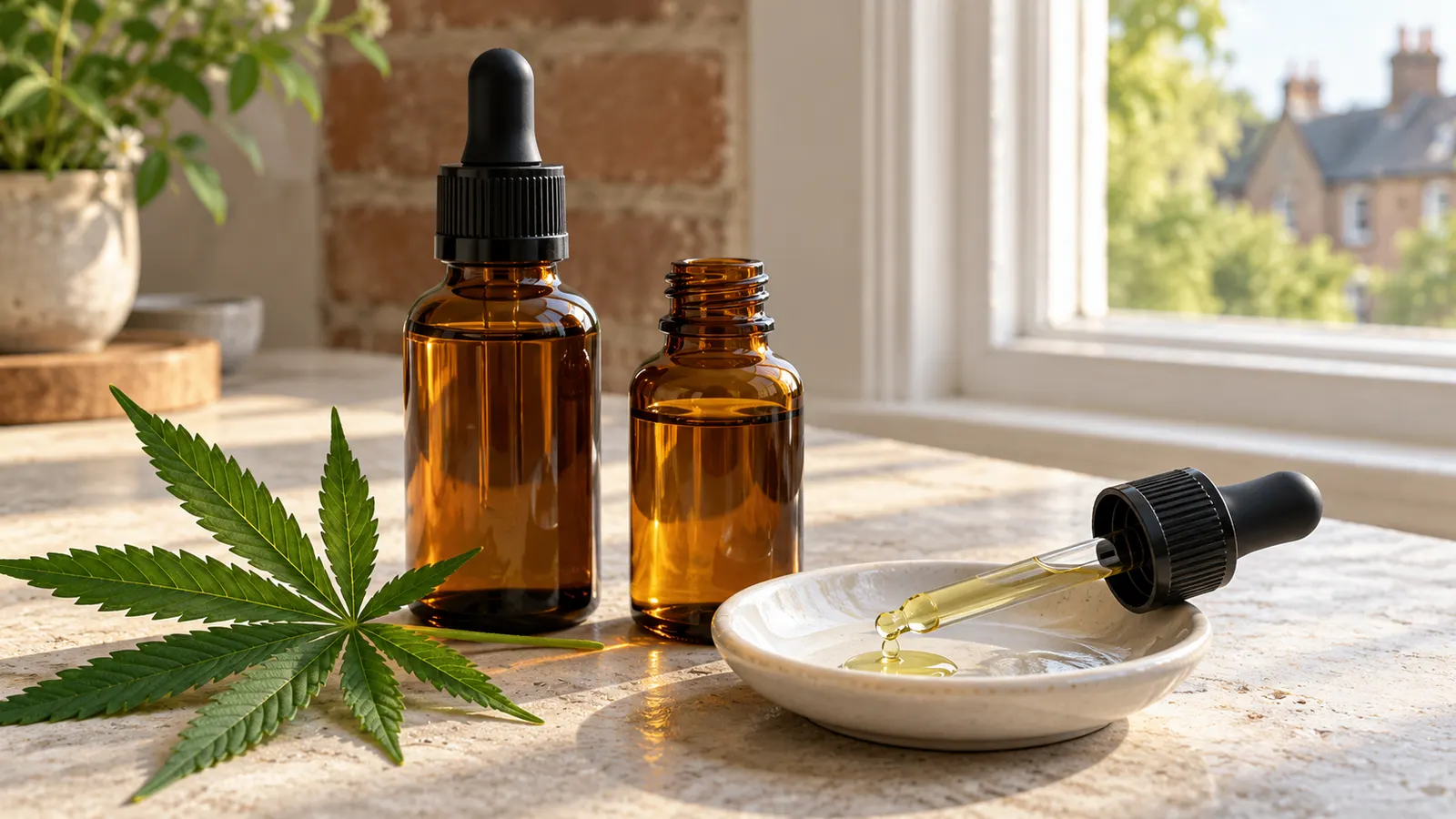
Les produits à base de CBD — huiles, gummies, capsules, vapes — peuvent être légalement vendus et achetés partout au Royaume-Uni, à condition qu'ils ne contiennent qu'une quantité infime de THC (le cannabinoïde contrôlé) et qu'ils soient enregistrés conformément à la réglementation sur les nouveaux aliments administrée par la Food Standards Agency. C'est pourquoi le CBD est vendu ouvertement dans les boutiques de rue, les pharmacies et les supermarchés, alors que la fleur de cannabis présentant une teneur significative en THC demeure une substance contrôlée : les deux sont réglementés comme s'il s'agissait de produits entièrement différents, car c'est légalement le cas. L'exigence d'enregistrement en tant que nouvel aliment a également poussé plusieurs petites marques de CBD hors du marché depuis son entrée en vigueur, le processus d'évaluation de la sécurité n'étant pas bon marché pour une entreprise vendant des produits de consommation à faible marge.
Les avertissements pour cannabis et la pratique policière
De nombreuses forces de police britanniques utilisent l'"avertissement pour cannabis" comme réponse par défaut lorsqu'une personne est trouvée en possession d'une petite quantité pour usage personnel — une réponse informelle et consignée plutôt qu'une arrestation, bien qu'elle laisse tout de même une trace pouvant réapparaître lors de futurs contacts avec la police. Les avertissements répétés se transforment généralement en avertissement formel, puis en poursuites judiciaires. Rien de tout cela ne constitue une décriminalisation : l'infraction reste exactement aussi illégale au cinquième avertissement qu'au premier, seule la réponse immédiate diffère, et celle-ci est déterminée par la politique de la force de police locale plutôt que par la loi nationale — ce qui signifie que l'expérience concrète d'être pris avec une petite quantité varie réellement selon l'endroit du pays où cela se produit.
Une loi qui a déjà évolué — et pourrait encore changer
Le statut de classe B du cannabis au Royaume-Uni n'est pas aussi figé qu'il y paraît. Le gouvernement a en effet reclassé le cannabis dans la catégorie moins sévère de classe C en 2004, avant de revenir sur cette décision en 2009 pour le replacer en classe B, invoquant des inquiétudes liées aux variétés modernes plus puissantes et aux risques pour la santé mentale — un véritable va-et-vient qui montre que la classification des drogues au Royaume-Uni est une décision politique révisée périodiquement, et non un verdict scientifique définitif. La législation sur les drogues relève également des compétences réservées au Parlement britannique, et n'est pas déléguée à l'Écosse, au Pays de Galles ou à l'Irlande du Nord : ainsi, quelle que soit la différence de discours politique sur le cannabis entre Édimbourg ou Cardiff et Westminster, la loi sous-jacente est identique partout au Royaume-Uni ; seules les priorités d'application sont fixées localement.
Ceci fait partie de notre guide complet sur la législation du cannabis en Europe — découvrez comment le Royaume-Uni se compare au reste du continent.
Graines associées
Questions fréquentes
No. Cannabis is a Class B controlled drug under the Misuse of Drugs Act 1971. Possession, supply, and cultivation are all criminal offenses, regardless of how lightly a first small-quantity case may be policed in practice.
Yes, since November 2018. Specialist doctors can prescribe cannabis-based medicines, though NHS access is limited to a narrow set of conditions and most prescriptions are issued through private clinics.
Yes. CBD products with only trace amounts of THC are legal and widely sold, regulated separately from cannabis under novel food rules rather than the Misuse of Drugs Act.
Many forces issue an informal cannabis warning for a first small-quantity offense rather than an arrest, but this varies by force and by history of prior warnings. The offense itself remains fully illegal either way.