African Cannabis Strains: Landraces, History and Law
The best-known cannabis strains with African roots are Durban Poison from South Africa, Malawi Gold from Malawi and the Beldia (or Beldiya) kif of Morocco's Rif mountains. Swazi and Kilimanjaro are names you will also see on seed lists. Most of these started as landraces: local plants that farmers kept and replanted in one region for generations. Two names that often turn up on "African strain" lists do not belong there. Afghan Kush and Hindu Kush come from the Hindu Kush range in Afghanistan and Pakistan, not from Africa.
Below: where cannabis in Africa came from, what a landrace is, the African lines worth knowing, what the potency stories get right and wrong, and the law in a few countries.
How cannabis reached Africa
Cannabis is not native to Africa. Geographer Chris Duvall, who wrote a book-length history of the plant on the continent, puts it like this: the plant evolved in central Asia and "arrived in east Africa over 1,000 years ago", coming from south Asia (Duvall, The Conversation, republished by TimesLIVE, December 2023).
Duvall's work makes two points worth knowing. First, eastern Africans found that smoking was a more efficient way to use cannabis than eating it, and he links the water pipe to African precedents. Second, he credits African farmers' own plant breeding for the high genetic diversity of cannabis on the continent. That second point is one reason African landraces are still interesting to breeders today.
The history is less tidy than many strain pages suggest. Exact dates, entry routes and the age of North African hash making are argued about by historians, so we leave the precise years out rather than repeat figures we cannot trace to a source.
What is a landrace strain?
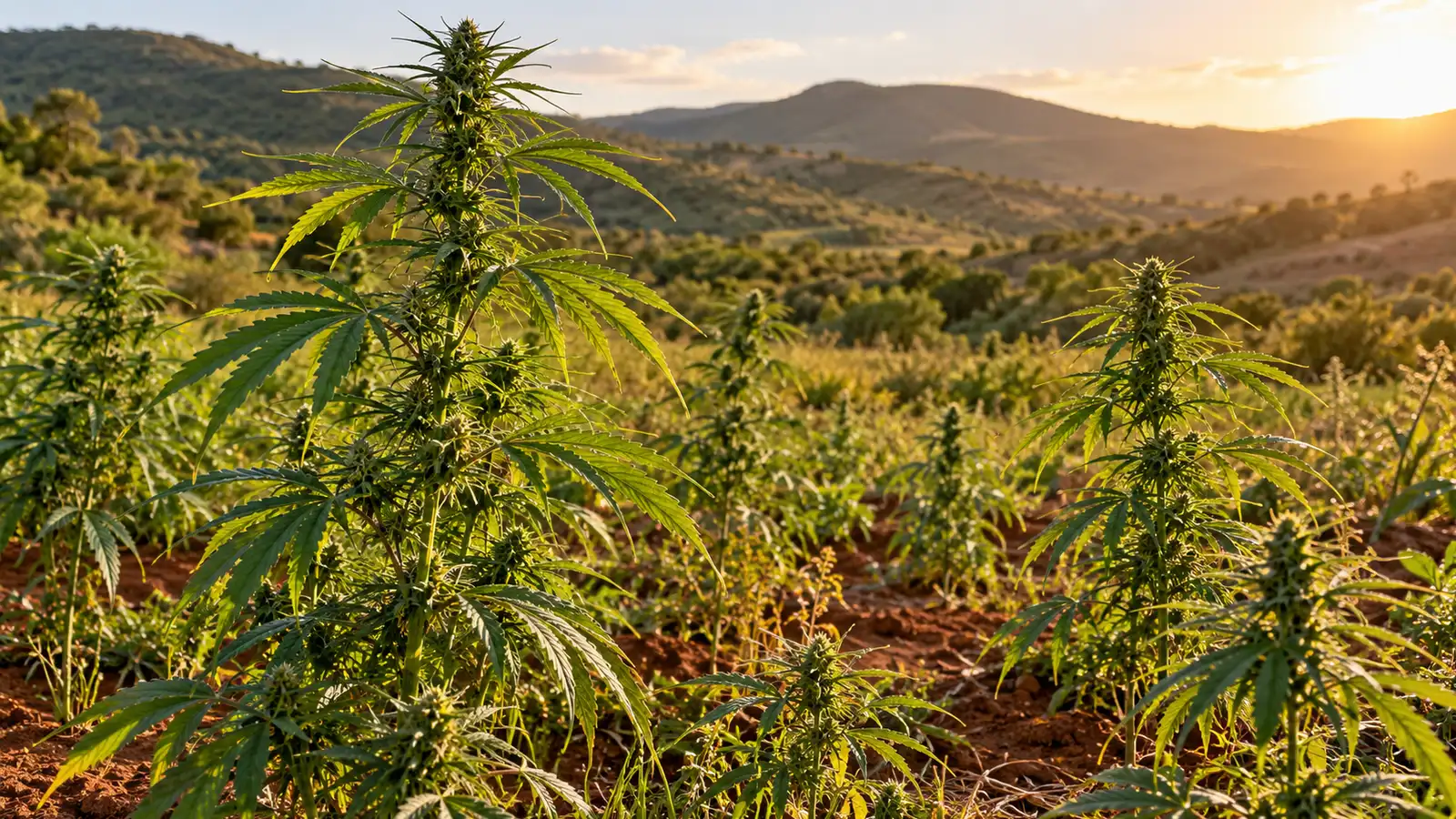
A landrace is a local population of cannabis that farmers in one place have grown, selected and resown for a long time. It is adapted to that place: its day length, rainfall, heat and pests. It is not "wild" cannabis, because people chose which plants to keep. It is also not a fixed, uniform strain. Seeds from a landrace can vary quite a lot from plant to plant.
Two things are worth knowing before you buy anything labeled "landrace":
- Once a landrace is taken out of its home region and bred elsewhere, it changes. A line kept in Europe for decades is better called a landrace-derived strain.
- Some classic landraces are being crossed with imported hybrids in their own home regions. In Morocco, for example, the local Beldia is grown next to imported varieties, and the regulator now backs research on the local line (see below).
African landraces worth knowing
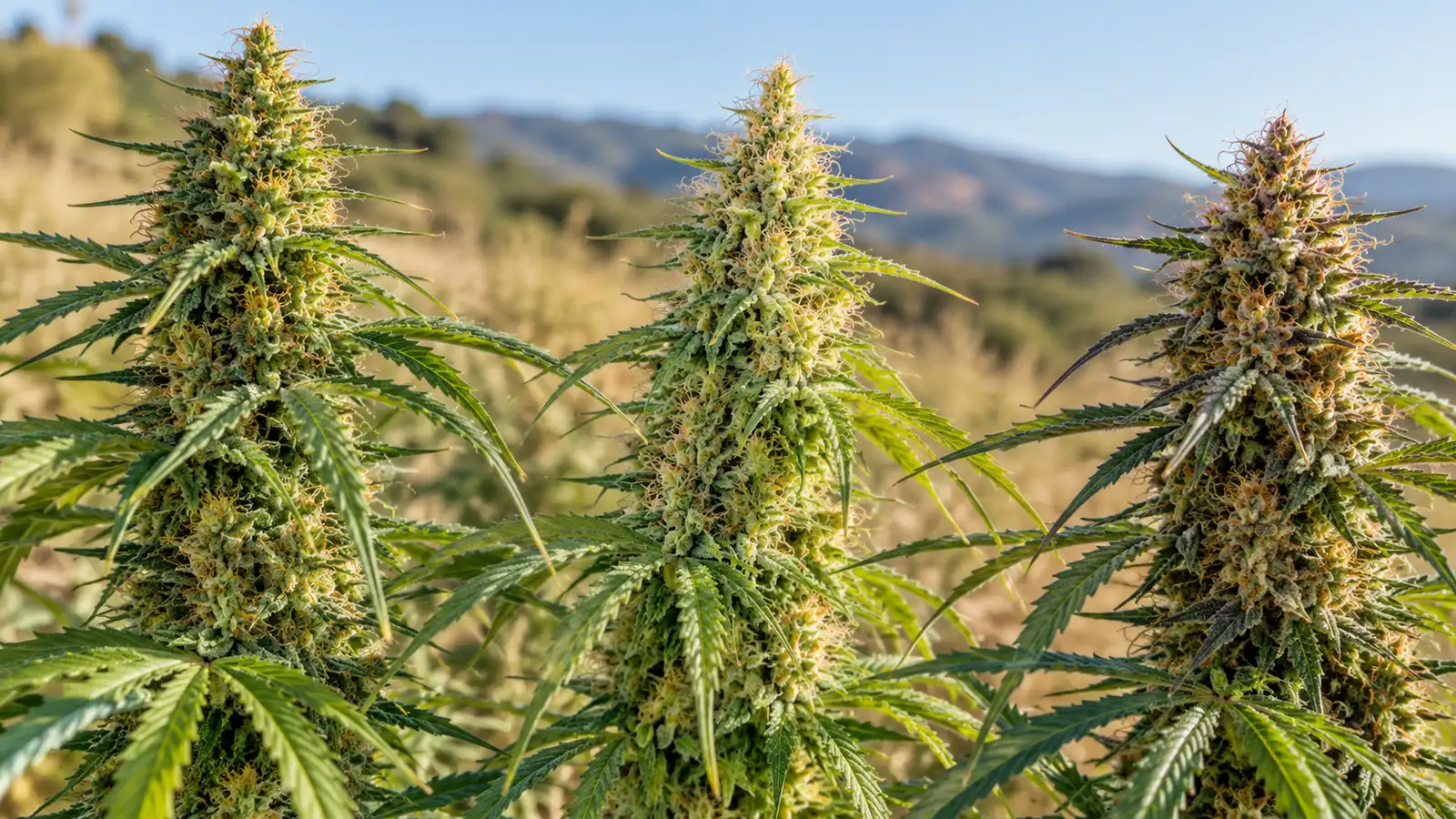
Durban Poison (South Africa)
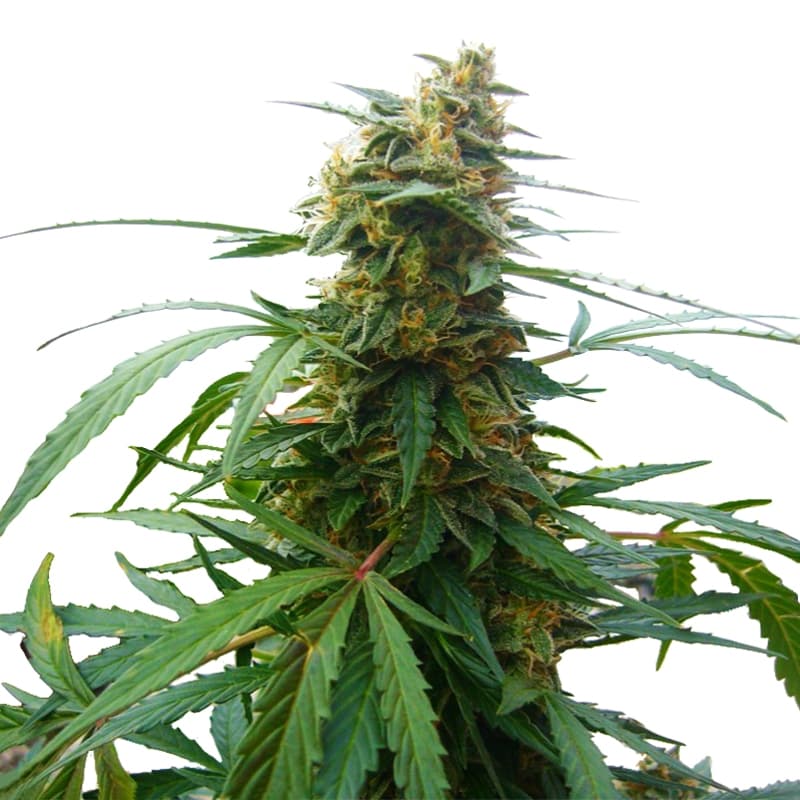
Durban Poison is named after the port city of Durban and is the African line most growers know. Our own catalog lists our Durban Poison Feminized as 100% sativa, up to 23% THC, with an 8 to 12 week flowering time, indoor height up to 160 cm and a difficulty rated moderate to expert. It is a tall, long-flowering plant. That suits a warm, long autumn far better than a short northern summer.
The version seed banks sell today is not a wild-collected landrace. Like most Durban Poison from seed banks, it is a line that has been bred and selected outside Africa for years.
Malawi Gold (Malawi)
Malawi Gold, also sold as Malawi or Chamba, is a sativa landrace name from Malawi in south-eastern Africa. We do not sell it, and we have not found a reliable lab source for its cannabinoid levels, so we will not repeat the THC figures that circulate online. If you come across seeds, ask the seller where the line was kept and for how long.
Beldia kif (Morocco)
Beldia is the traditional cannabis of the Rif mountains in northern Morocco. It is a real, living landrace. Morocco's cannabis regulator ANRAC says it has been "traditionally cultivated for generations in the Rif region" and that, unlike imported seeds, it can be grown with minimal irrigation. In June 2025 ANRAC and Mohammed VI Polytechnic University signed an agreement to research Beldia, and the African Genome Center is to sequence its genome (Ecofin Agency, June 2025).
Swazi and Kilimanjaro
Swazi (from Eswatini, formerly Swaziland) and Kilimanjaro (from the Tanzania and Kenya border region) are landrace names you will find with some seed sellers. We could not find solid sources for their traits, so we only mention them here so you can recognize the names.
Not African: Afghan Kush and Hindu Kush
Afghan Kush and Hindu Kush are named after the Hindu Kush range in Afghanistan and Pakistan. Some seed lists present them as African, which is wrong. Habiba is sometimes called a Moroccan landrace too, but our catalog lists it as 100% indica and descended from Mazar, so we do not present it as African.
Are landraces weaker than modern strains?
You will often read that a real landrace is less potent than a modern strain. It is partly true, and the reason is worth knowing.
Modern breeding and growing methods did push THC up. A US study of seized cannabis found that average THC rose from about 4% in 1995 to about 12% in 2014, alongside a shift from seeded cannabis to seedless sinsemilla (ElSohly et al., 2016). That tells you how much growing method matters. It does not say African landraces are weak.
In fact, a 1980 South African lab study found at least three chemical types of cannabis growing in the country, one apparently unique to southern Africa, and reported South African cannabis to be among the more potent varieties worldwide in THC (Field and Arndt, Journal of Pharmacy and Pharmacology, 1980).
So the answer is: it depends on the line, the plant and how it was grown. A seeded landrace plant grown by a farmer in its home climate is a different thing from a sinsemilla flower of the same line grown under lights. We have not found a reliable source for the claim that African strains "tend to produce high levels of CBD", so we do not repeat it.
Growing African genetics outside Africa
Sativas from tropical and southern Africa grew up with long, warm seasons. In a northern European summer, a pure sativa that flowers into late autumn risks cold nights, rain and mold before it is ripe. That is why, for growers in the north, we usually point to autoflowers or to fast-finishing indicas and hybrids instead. If you want to grow a landrace-type sativa anyway, a greenhouse or an indoor grow gives you control over the season.
Every strain in our range has been grown by AMS at least once, and we keep our base genetics in-house. Some of the people behind AMS have been growing for close to 40 years, and their advice for these old lines is the same as for anything else: grow them with passion, not for the money.
Cannabis law in Africa today
Laws change, so check the current situation before you act on any of this. As of the sources below:
- Morocco: Law 13-21 of July 2021 allows licensed cultivation and processing for medical and industrial use, with each activity authorized by ANRAC. Recreational use is not allowed (CMS legal guide, updated September 2024).
- South Africa: the Cannabis for Private Purposes Act regulates cultivation, possession and use by adults in a private setting. Dealing in cannabis stays prohibited (IDPC, June 2024). Whether the Act has fully come into force is something to check against the Government Gazette.
- Other countries: Duvall lists Malawi, Zimbabwe, Uganda, Lesotho, Eswatini and the Democratic Republic of the Congo among countries that allow commercial cannabis farming under licence, and notes that licence fees are often unknown or unaffordable for local farmers (Duvall, December 2023). Commercial licensing is not the same as legal personal use.
Where to start
Durban Poison is the best-known African line, but sativas like it need a long, warm season or an indoor space, so think about your climate first. Our sativa seeds show what is in stock now. If what you are really after is an easy, hardy plant, the Hindu Kush-type indicas such as Afghan or Habiba are simpler to grow, as long as you know they are not African landraces.