Mother of All Buds Strain: Effects, THC and Grow Info
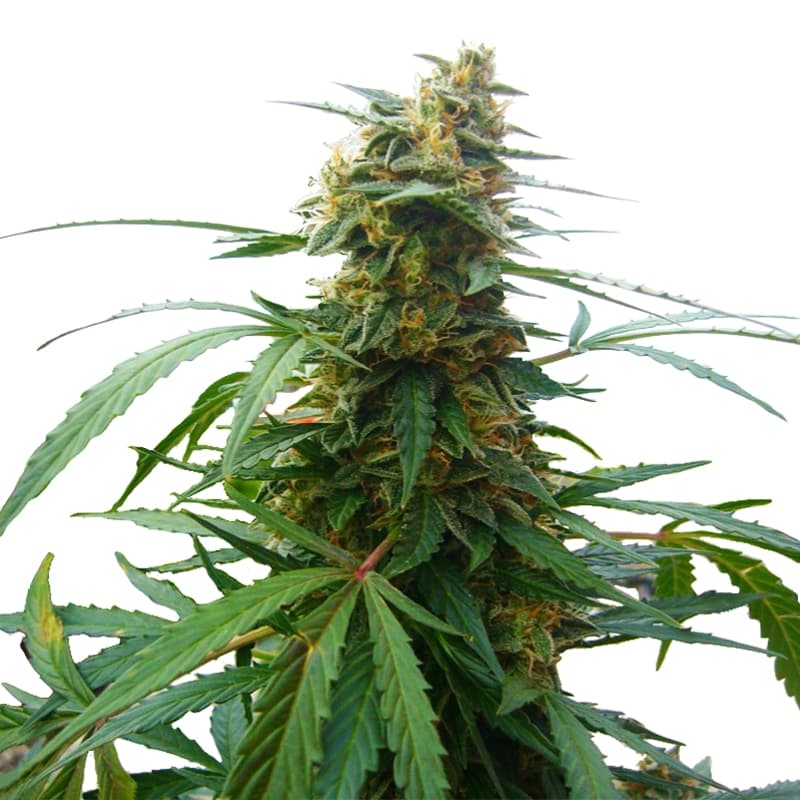
MOAB, short for Mother of All Buds, is a sativa-dominant strain from Amsterdam Marijuana Seeds. It is a cross of Blueberry 420 x Chemdawg with Blue Dream XTRM x Hindu Kush, leaning about 80% sativa and 20% indica. THC reaches up to 23%, and the main effects are euphoric and happy. It comes as a feminized and an autoflower seed. You can grow it yourself from MOAB feminized seeds.
MOAB strain at a glance
- Genetics: Blueberry 420 x Chemdawg with Blue Dream XTRM x Hindu Kush
- Indica / sativa: 20% / 80%
- THC: up to 23%
- Flowering time: 8 to 12 weeks (autoflower 6 to 10)
- Indoor yield: up to 550 g/m2
- Indoor height: up to 140 cm (autoflower up to 75 cm)
- Effects: euphoric and happy; flavour of berries, earthy, fuel and sweet
MOAB, short for Mother of All Buds, is a sativa-dominant strain from our own breeders, made for growers who want a big harvest and don't mind putting in the work. It's not the easiest plant to grow, but with experience behind you it can pay off well.
Where MOAB comes from
Everyone involved in AMS, from the owners and founders to our staff and the master breeders we work with, grows and smokes cannabis. Some of us have been doing it for close to 40 years. MOAB comes from that experience.
Genetics
MOAB is a cross of Blueberry 420 x Chemdawg with Blue Dream XTRM x Hindu Kush.
The result leans clearly sativa: about 80% sativa and 20% indica.
Strength and yield
Our breeders give MOAB a THC level of up to 23%. Treat that as a guide rather than a guarantee: the THC in your own harvest depends on the plant, your setup and when you harvest.
Outdoors, MOAB can give up to 600 grams (21 ounces) per square metre. Indoors it can reach up to 550 grams (19.4 ounces) per square metre. Those are top figures for good conditions; a first grow or a small space will usually give less.
Feminized or autoflower?
We sell MOAB in two versions, and they behave quite differently:
- MOAB feminized: a photoperiod plant that grows up to about 140 cm indoors and flowers in 8 to 12 weeks. It needs more time and room.
- MOAB autoflower: flowers on its own schedule, stays smaller at up to about 75 cm indoors, and flowers in 6 to 10 weeks. Handy if you're short on space or time.
Is MOAB a good strain for beginners?
Not really. We rate it moderate to expert. A tall sativa with a long flowering time needs close attention for weeks. If you're new to growing, start with something more forgiving and come back to MOAB once you have a grow or two behind you.

Smell and taste
The buds smell skunky, with earthy and sweet notes underneath. The taste leans towards berries. How a strain feels always differs from person to person and depends on how much you take.
Looking for more strains like it? Browse our sativa seeds.
Похожие семена
How do you grow MOAB indoors and outdoors?
MOAB is not the best strain for a first grow. It needs more than basic knowledge, and we rate the grow difficulty moderate to expert. That does not mean the plant is awkward for its own sake. Plan the space before you start, pick your technique, and keep one steady routine through the whole cycle.
Indoors
Indoors, the feminized plant grows up to 140 cm and flowers in 8 to 12 weeks. The autoflower stays around 75 cm and flowers in 6 to 10 weeks, which suits a smaller setup or a shorter run. Indoor yield reaches up to 550 g/m2 when the plant gets what it needs.
Growers often use Sea of Green (SOG) or Screen of Green (SCROG) indoors, and both help MOAB develop buds more evenly by spreading the canopy out. The techniques keep the canopy at a workable height and let light reach the lower bud sites instead of only the top. Keep an eye on temperature, humidity and light from the first week to the last, and feed with care through the cycle. Steady conditions beat big swings, and a plant checked daily shows problems while they are still small.
Outdoors
Outdoors, choose a sunny spot with nutrient-rich soil and plenty of airflow. Outdoor yield reaches up to 600 g/m2. The plant gets big outside and can be seen from far away, so think about where you grow it before the season starts. A spot with good air movement and some shelter from view serves you better than an open position in the middle of the garden.
Even outside, keep an eye on temperature, humidity and light, and feed with care through the cycle. Airflow does much of the mould prevention work on its own, which suits a plant that packs its buds densely, and a sunny open position gives that airflow room to work.
During flowering
Flowering is the part that separates MOAB from an easy plant. The feminized version flowers in 8 to 12 weeks and the autoflower in 6 to 10 weeks, so you are watching the same buds for a long stretch. Check humidity often as the buds swell, keep the air moving, and adjust temperature and light as conditions change indoors or as the weather turns outdoors. Dense buds ask for attention every week, not a single check when you first see flowers. Daily checks take a minute and catch problems while they are still small.
Feed with care through flowering, because measured and regular beats a heavy hand late in the run. Watch the dense buds closely for mould, give them space, and let the plant finish at its own pace. When the flowering time is done, you are left with a large plant and a harvest that repays the attention it took. That is the deal with MOAB: more knowledge and more watching, in exchange for a bigger plant at the end.
What does our grower Jan van Amsterdam say about drying buds?
Drying is where a big harvest keeps its quality or loses it, and MOAB is a big-yielding plant with dense buds that will not dry evenly if you rush the job. The care you give the plant in the tent should carry on after the chop, because a rough dry can undo weeks of careful growing in only a few days, and the middle of a dense bud is exactly where moisture lingers. Here is general advice from our grower Jan van Amsterdam on drying buds.
Jan van Amsterdam: "Preferably hang to dry, for a nicer result, and dry slowly at room temperature. A dark and dry drying room, with humidity as low as possible. Heat the drying room if necessary."
What does research say about terpenes, light, drying and mould?
The work below is general cannabis research, not research on MOAB itself, and it still tells a grower something useful about terpenes, light, drying and mould. Each point comes from one source and translates into a practical step you can take.
A review in the British Journal of Pharmacology (Russo et al.) proposes that terpenes may shape how cannabinoids such as THC feel, rather than the effect coming from THC alone. For a grower that means the terpene profile you protect during harvest, drying and storage is part of the finished quality, not just the smell in the jar. There is a limit to what can be concluded, because much of the evidence comes from lab and animal work, so the picture in people is not settled. In practice that points to one habit: dry and store with care so the terpenes stay in the flower, and treat claims about one terpene changing your high as an open question rather than a fact.
An indoor study from 2022 (Llewellyn et al.) found that cannabis yield rose roughly in step with light intensity, while extra ultraviolet light did not raise yield. Put effort into strong, even light across the canopy instead of buying ultraviolet gear to chase a bigger harvest. Light still has to be balanced against heat and plant comfort, so raise intensity in stages and watch how the plants react. A plant that stretches during flowering needs light reaching every bud site, so spreading the canopy out earns its place in the tent.
A study from 2024 (Birenboim et al.) found that drying conditions change how many terpenes stay in the flowers, and that the best drying approach differs per cultivar. That lines up with Jan van Amsterdam's advice: hang the buds, dry slowly at room temperature, and keep the room dark with humidity as low as possible. Slow drying protects the terpenes that heat and speed push out of the flower. The per-cultivar part means no single schedule fits every plant, so check your own buds as they dry instead of copying a fixed routine from someone else.
A 2024 review of pathogens in greenhouse cannabis (Buirs et al.) found that bud rot, caused by Botrytis, is a main threat, and that controlling humidity and airflow is part of prevention. That matters for MOAB, because dense buds hold moisture where air struggles to reach. Give the plant room, keep air moving around the canopy, and watch humidity through flowering and again while the buds hang to dry. Space between hanging branches is what lets the slow drying Jan recommends actually work. Remove crowded or damaged growth early and you take away some of the places where mould starts. Airflow and humidity control work together, because one moves moist air away while the other keeps the level from rising.
On responsible use: a systematic review from 2022 (Petrilli et al.) found that higher-potency cannabis was linked to a higher risk of psychosis and cannabis use disorder. MOAB reaches up to 23% THC, which sits on the stronger side, so start slowly, keep doses modest, and wait to feel the effect before taking more. This is general information, not medical advice.
Frequently asked questions
What is the MOAB strain?
MOAB, short for Mother of All Buds, is a sativa-dominant strain from our own breeders. It crosses Blueberry 420 x Chemdawg with Blue Dream XTRM x Hindu Kush and leans about 80% sativa and 20% indica.
Is MOAB indica or sativa?
MOAB is mostly sativa, about 80% sativa and 20% indica. Both the feminized and the autoflower version are listed as sativa.
How strong is MOAB?
THC reaches up to 23%. The listed effects are euphoric and happy.
How long does MOAB take to flower?
The autoflower finishes in 6 to 10 weeks. The feminized plant flowers in 8 to 12 weeks.
Is MOAB good for beginners?
Not really. We rate it moderate to expert, and it needs close attention through a long flowering time. Beginners do better with a more forgiving strain first.