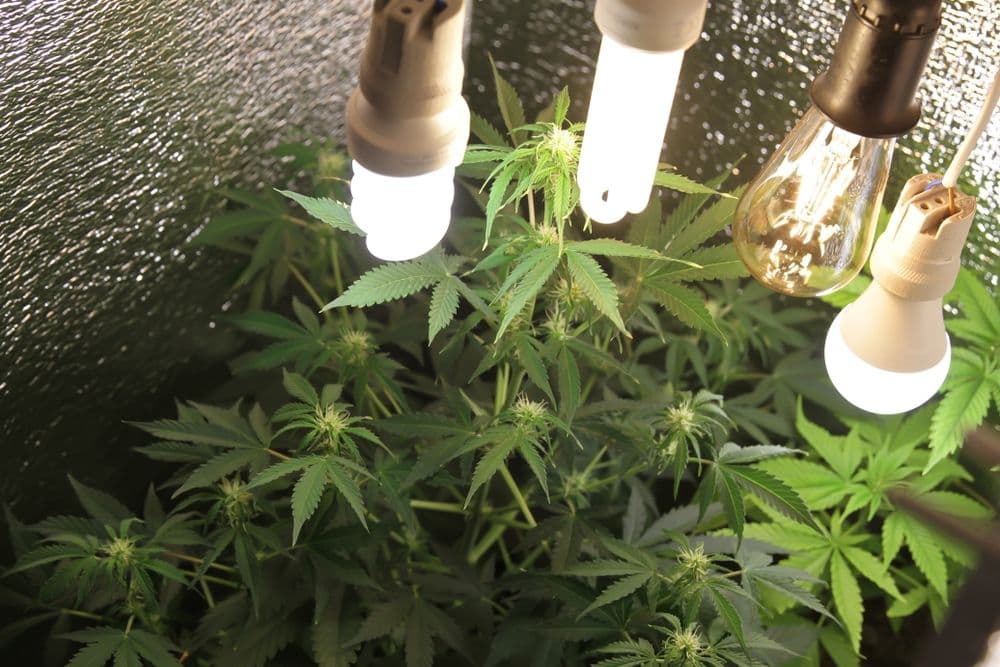
Environmental Stress in Cannabis: Spot It and Fix It
Environmental stress is what happens when a cannabis plant spends too long outside the conditions it likes: too hot, too cold, too wet, too dry, too much light, light at the wrong time, too much wind, or water and pH that block the roots. The plant tells you through its leaves, its growth speed and, later, its buds. The trick is working out which of those causes you are looking at before you change anything, because the fixes pull in different directions.
Each stress below comes with what it looks like and what to do about it. Where a figure comes from research, we link the study. Where something is our own view as growers and breeders, we say so.
First, how to tell which stress it is
Most stress shows up in a handful of ways, and several causes share the same symptom. Before you reach for a heater, a fan or a bottle of pH down, check these in order:
- Where on the plant is the damage? Damage only at the top, closest to the lamp or the midday sun, points to heat or light. Damage spread over the whole plant points more to roots, water or pH.
- What did the room or the weather do this week? A thermometer and hygrometer with a min/max memory tell you more than a reading taken when you happen to walk in.
- When did you last water, and what went in? Wet soil plus drooping leaves is a different story from dry soil plus drooping leaves.
- Is it one plant or all of them? One plant out of several in the same spot often means genetics or a root problem in that pot. All of them at once points to the environment.
Change one thing at a time and give the plant a few days. New growth is the honest judge: old damaged leaves will not recover, but clean new leaves tell you the fix worked.
Heat
Heat stress turns up indoors in summer, when the tent sits in a warm room, and outdoors during a heat wave. Signs are leaves at the top that fold up along the middle (often called tacoing), pale or bleached tips close to the lamp, and buds that grow loose, foxtailed spires instead of filling out.
What the research says: in a controlled study, Chandra et al. measured photosynthesis in cannabis at 20, 25, 30, 35 and 40 °C and concluded that the optimum for photosynthesis lies at 25–30 °C. Above 30 °C, stomatal conductance dropped, and high temperature generally reduced photosynthesis and water use efficiency (Chandra et al., Physiology and Molecular Biology of Plants, 2008). That was measured on leaves in a lab, not on whole plants through a full harvest, so treat it as a guide rather than a hard rule.
What to do:
- Raise the lamp or dim it before you buy anything new. Heat and too much light often arrive together at the top of the canopy.
- Get the warm air out. An extraction fan that pulls air from the top of the tent does more than a fan that only stirs hot air around.
- Run the light period at night in summer, when the air coming in is cooler.
- Outdoors, water early in the morning and keep pots out of direct afternoon sun where you can. Dark pots in full sun heat the roots.
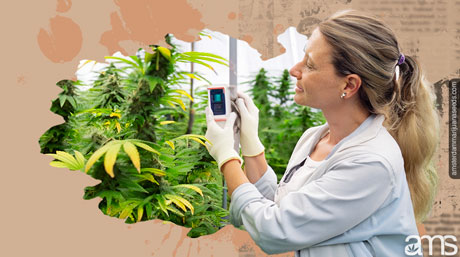
More detail: Preventing light burn and heat stress and Managing extreme temperatures.
Cold
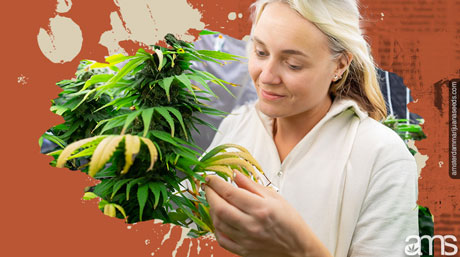
Cold slows everything down. Plants that are too cold drink less, grow slowly and can show purple stems or leaves, especially when nights drop sharply. Purple color on its own is not a problem: some strains turn purple by genetics. It becomes a stress sign when growth also stalls and the soil stays wet for days.
Indoors, cold usually means an unheated attic, garage or basement where the room cools right down once the lamp goes off. Outdoors, it is the late spring night after you planted out too early, or the autumn cold that arrives while buds are still filling.
What to do:
- Lift pots off a cold concrete floor. A pallet or a piece of insulation under the pot keeps the roots warmer.
- Water less often and with water at room temperature. Cold, wet roots are where trouble starts.
- Indoors, a small thermostat-controlled heater for the dark period fixes most cold rooms.
- Outdoors, do not plant out before your last frost has passed, and choose strains that finish before your autumn cold sets in.
More on this in Growing weed in cold climates and Cold weather cannabis cultivation.
Humidity
Humidity can go wrong in two directions. Air that is too dry makes plants lose water faster than the roots can supply it, so leaves droop or curl and the edges can dry out, even though the soil is fine. Air that is too damp is the bigger risk in flower: dense buds hold moisture, and that is where bud rot starts. You often spot it late, as a brown, dead-looking piece inside an otherwise healthy bud.
Humidity and temperature belong together. The same humidity reading means something different at a cool temperature than at a warm one, which is why many indoor growers work with VPD (vapor pressure deficit) rather than humidity alone. Our VPD guide explains it, and Optimal humidity for cannabis plants grown indoors covers the practical side.
What to do:
- Too damp: more air exchange, a fan moving air through the canopy, remove leaves that block airflow inside the plant, and a dehumidifier if the room stays wet.
- Too dry: lower the temperature a little, reduce extraction, or add a humidifier for young plants.
- Outdoors in a wet climate: pick strains with a loose bud structure and a short flowering time, and check the inside of the biggest buds after every rainy spell.
If you already have mold: Prevent fungus and control mold and How to remove marijuana mold from your plants. For outdoor growers in a rainy region there is a separate guide on growing in a temperate and wet climate.
Light: too much, too little, and at the wrong time
Too much light
Light burn looks a lot like heat stress: bleached, yellow or white leaves at the very top, right under the lamp, while the lower leaves look fine. With modern LED lamps it can happen even when the air temperature is normal, because the light itself is the problem. Chandra et al. found that at high temperature, photosynthesis no longer went up with more light past a certain intensity and even dropped (Chandra et al., 2008). In practice: more light only helps when the temperature, water and feed keep up with it. Raise or dim the lamp and watch the new growth.

Too little light
Plants that do not get enough light stretch: long gaps between the nodes, thin stems, small leaves, and airy buds later on. Indoors, lower the lamp step by step or add light. Outdoors, it usually means a spot that gets too few hours of direct sun. See Best lighting for indoor growing weed.
Light at the wrong time, and light leaks
Most photoperiod cannabis is a short-day plant: it starts flowering when the light period gets shorter. Indoors, growers switch to 12 hours of light and 12 hours of dark to start flowering. One study suggests that schedule is a convention rather than a law of nature. Peterswald et al. compared several flowering photoperiods and concluded that "the assumption that a 12L:12D photoperiod is optimal for all lines is incorrect" (Peterswald et al., Plants, 2023).
What does matter is that the dark period is dark and regular. Light leaking into a tent through a zip, a vent or a status LED, or a timer that fails, interrupts the night. A plant that keeps growing leaves when it should be flowering, or a feminized plant that shows male flowers, is a reason to check for leaks. Stand inside the tent with the lamp off and the room light on and look for any glow. It is not the only cause of those symptoms, though: genetics and other stress play a role too, so do not stop looking once you have found a small leak.
Outdoors, the same applies to street lights, a security lamp or a lit window shining on plants at night. Moving the pot a few meters often solves it.
Autoflowers are different: they flower by age, not day length, so a light leak will not throw their flowering off in the same way. That is one reason they are easier on a balcony or in a tent that is not fully light-tight. See Best light schedule for your autoflower strain and Why your autoflower is not flowering.
Wind
A gentle breeze is good for plants: it thickens the stems and keeps air moving around the buds, which mold does not like. Strong wind outdoors is a different matter. It dries plants out fast, tears leaves, and can snap branches heavy with buds late in the season.
What to do: plant on the sheltered side of a wall, hedge or fence, tie or stake the main branches before flowering gets heavy, and water a little more on windy, sunny days. Indoors, point fans so the leaves move gently; leaves that whip around all day, or that sit in a constant blast, can dry out and curl. Our guide on growing weed in windy areas has more.
Water and pH
A lot of what looks like environmental stress starts in the root zone. Overwatering keeps the roots short of air: leaves droop while the soil is still wet, and in the worst case the roots rot. Underwatering makes the plant droop too, but then the pot feels light and the soil is dry. Lift the pot before you water; after a few weeks you can feel the difference.
pH is the other hidden cause. If the pH of the water or the medium is off, the roots cannot take up certain nutrients even when they are present. The result looks like a deficiency (spots, yellowing, burnt edges), and growers then add more feed, which often makes it worse. The right range differs between soil and coco or hydro, so check the guide for your medium: pH value when growing weed and Managing pH levels for nutrient absorption. Water quality itself also matters: Why water quality matters, How much water does a cannabis plant need and Overwatering and root rot.
What we would tell a grower starting out
We grow all of our base genetics ourselves, and every strain we sell has been grown by us at least once. Some of us have been growing and breeding for close to 40 years. A few things that follow from that, as our own view rather than research:
- Measure before you fix. Changing things on a guess often makes it worse. A cheap min/max thermometer and hygrometer soon pays for itself.
- Fix the room before you reach for the bottle. A lot of problems that look like a feeding problem are temperature, light distance, water or pH.
- Pick a strain that suits your conditions. In a short northern summer, autoflowers generally do better outdoors than tall photoperiod strains that finish late. In a hot, dry spot, look at strains described for warm climates. Our guide Marijuana seeds compatible with your climate helps you choose.
- Grow with patience and passion, not for the money. Growers who check their plants every day see stress early, and early is when it is easy to fix.
Choosing seeds with your conditions in mind
If your space or climate is the limit, let that guide your seed choice. Autoflower seeds are the forgiving choice for short summers and for grow spaces that are not fully light-tight. Feminized seeds give you more control over plant size indoors, where you set the light schedule yourself. Not sure yet? Browse all our cannabis seeds and check the climate and difficulty details on each product page, or read up first on the legal status of growing cannabis where you live.