Eco-Education: A Unique School in the Forest
Utopia III – A Unique School in the Forest
Integral to the ethos of this eco-village is the idea of sustainability and harmony, not just with nature, but with each other. Recognizing that this ethos needs to be imbibed in the younger generations for it to continue, the team decided to establish a unique school within the village boundaries.
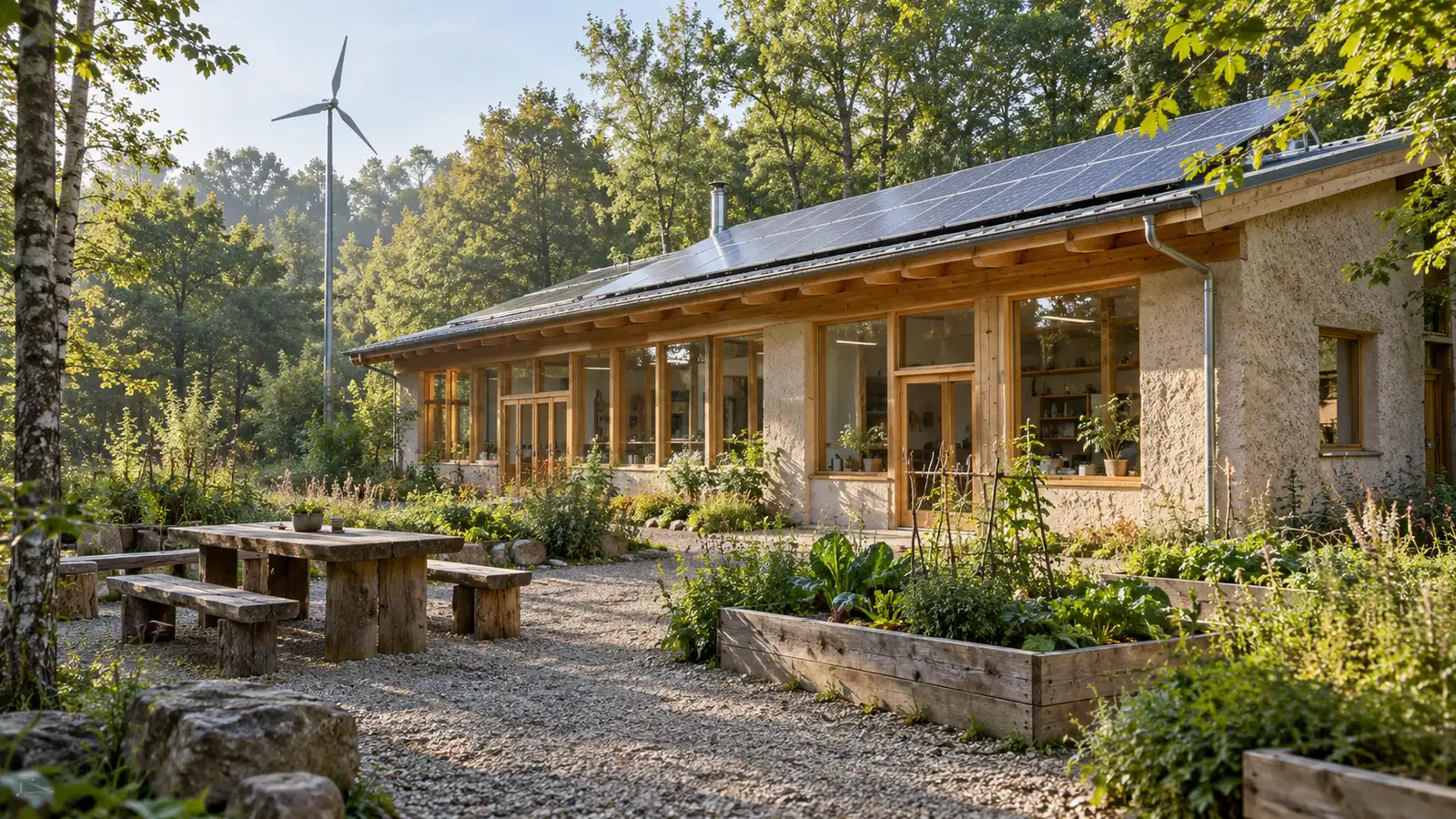
This school, nestled amidst the verdant beauty of the Bialowieza Forest, was designed by the visionary Italian architectural firm with eco-friendly principles in mind. Built from sustainable materials, primarily hempcrete, the school stands as a testament to the potential of green building. Solar panels on the roof and a small wind turbine supply all the electricity that the school needs, making it entirely energy self-sufficient.
The school’s curriculum focuses on equipping children with the knowledge and skills they need to live sustainably and in harmony with nature. Alongside standard subjects, the students learn about sustainable farming, waste management, renewable energy sources, and responsible consumption. They are taught to respect and understand the natural world around them, fostering a sense of stewardship for the environment.
Hands-on learning is encouraged. The children help in the communal farm, understanding how food is grown and appreciating the effort it takes to cultivate crops. They learn how to care for the animals, about crop rotation, composting, and natural pest control methods. They help in the harvest and learn to prepare food from fresh, organic ingredients.
But the learning is not confined only to agriculture. Students learn the process of making hempcrete and other hemp-based products, understanding the value of sustainable materials. They participate in the maintenance of the village, helping to repair buildings or construct new ones. They understand how solar and wind energy is harnessed, and the importance of conserving water through lessons in rainwater harvesting and greywater recycling.
The school also places a strong emphasis on community living and cooperation. Students are taught conflict resolution, effective communication, and the importance of shared responsibility. They are encouraged to make decisions collectively and respect diverse opinions, fostering an environment of inclusivity and mutual respect.
Through this education, children in the village grow up with a deep understanding of the interconnectedness of all living things, and the importance of living sustainably and responsibly. They are empowered to continue the legacy of their eco-village, living in harmony with nature, and each other. It is an education that goes beyond textbooks, nurturing a new generation ready to take on the mantle of guardianship of the planet.
Похожие семена
FAQs about Eco-education
The school's curriculum focuses on equipping children with the knowledge and skills they need to live sustainably and in harmony with nature. Alongside standard subjects, the students learn about sustainable farming, waste management, renewable energy sources, and responsible consumption.
Hands-on learning is encouraged. The children help in the communal farm, understanding how food is grown and appreciating the effort it takes to cultivate crops. They learn how to care for the animals, about crop rotation, composting, and natural pest control methods.
The school also places a strong emphasis on community living and cooperation. Students are taught conflict resolution, effective communication, and the importance of shared responsibility. They are encouraged to make decisions collectively and respect diverse opinions, fostering an environment of inclusivity and mutual respect.