How to Control Plant Height in a Grow Tent
To control plant height in a grow tent, you need to work on four things together: pick a plant that fits the tent, keep the lamp at a sensible distance, train the plant while it is still young, and plan for the stretch that follows the switch to 12/12. Height is easiest to manage before the plant is tall. Once the top touches the lamp or the tent roof, you are fixing a problem instead of preventing one. This guide shows what to do in each stage, what Jan van Amsterdam does with his lights, and which methods suit beginners.
Why do plants get taller than expected in a grow tent?
A grow tent has a fixed ceiling, and a cannabis plant does not know that. Three things push a plant upward faster than most new growers expect: genetics, the light it receives and the change to flowering.
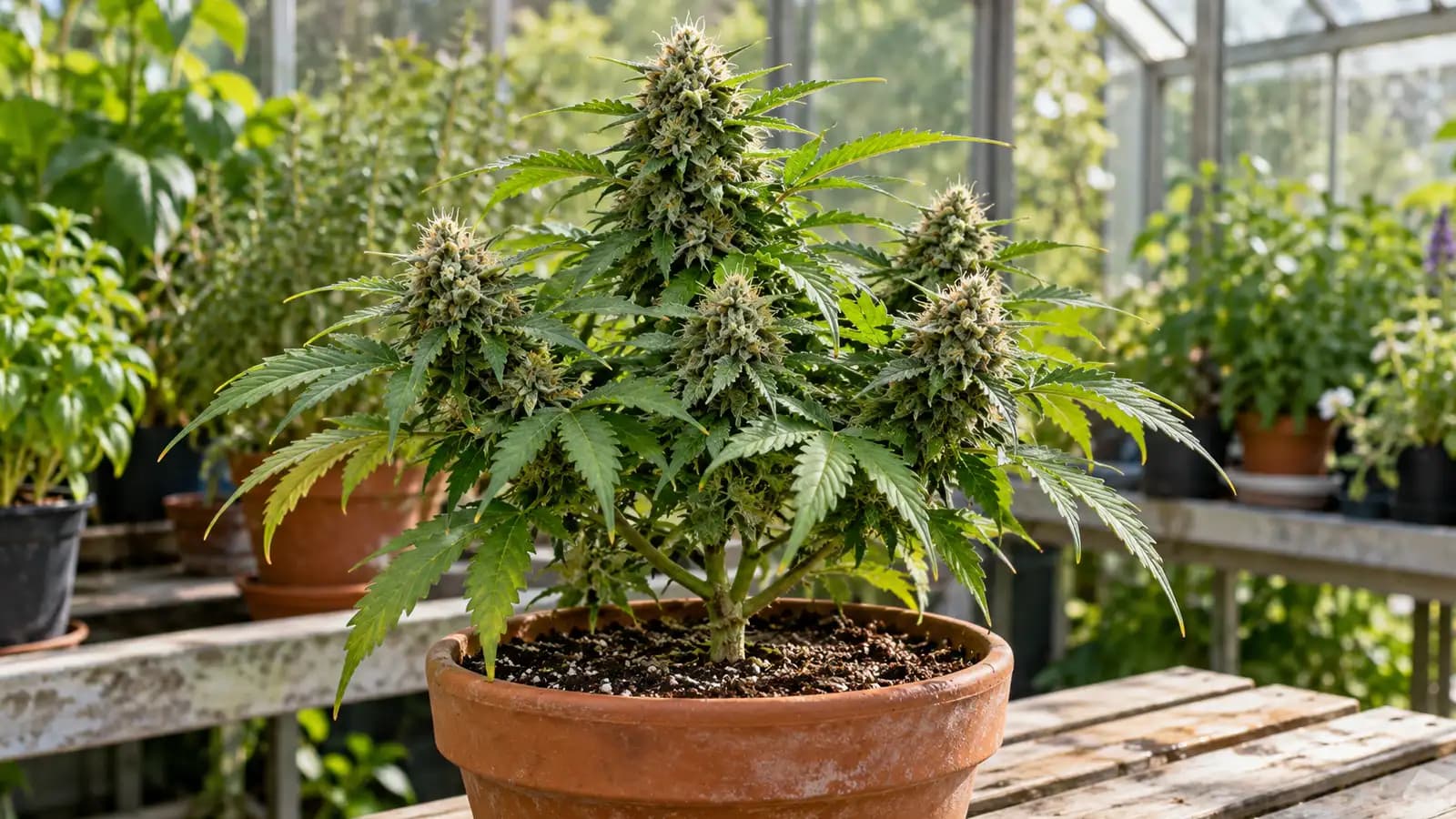
Genetics set the ceiling. Some plants stay compact and bushy, others grow long and open, and the height printed on a product page is a guide, not a promise. Indoors, plants often end up taller than that figure, because a tent gives steady light, water and feed all day. In the product reviews our customers have left over the years, the same story comes back: plants grew taller indoors than they had planned for, and growers hit the light before they hit the end of flowering. Many of them then started to train their plants or strip leaves to make room.
Light is the second factor. In the same reviews, growers who used a weak lamp describe long, thin and floppy stems, and several saw their plants branch out much more after they changed to a better LED. A plant that has to reach for its light puts its energy into length. A plant with enough light stays tighter between the nodes.
The third factor is the flip. Photoperiod cannabis is usually triggered to flower by cutting the light to 12 hours on and 12 hours off (Plants, 2023). Plants often grow a lot in the first one to two weeks after that, which is described as the pre-flowering stretch (overview of cannabis cultivation). How much a plant stretches depends on its genetics, so a plant that looks short at the end of veg can still end up much taller.
How tall can a plant be before you flip to 12/12?
Work backwards from the tent. Measure the distance from the pot to the lamp, and leave a safe gap between the top of the canopy and the light. Then divide what is left by the stretch you expect. A plant that is already two thirds of the tent height at the flip has very little room left.
We cannot give you one number for every strain, so it is safer to watch the first plants you grow and write the figures down. If your first grow ended with a plant pressed against the lamp, flip it earlier next time, at a lower height. If it ended with a lot of empty space above the plants, you can let them grow longer in veg.
A few habits help:
- Measure the plant from the soil, not from the pot rim, and do it on the same day every week.
- Note the date of the flip and the height at that moment.
- Measure again one and two weeks later, so you know what stretch your genetics gave.
- Keep the numbers for the next run. They are worth more than any general rule.
How far should the lamp be from the plants?
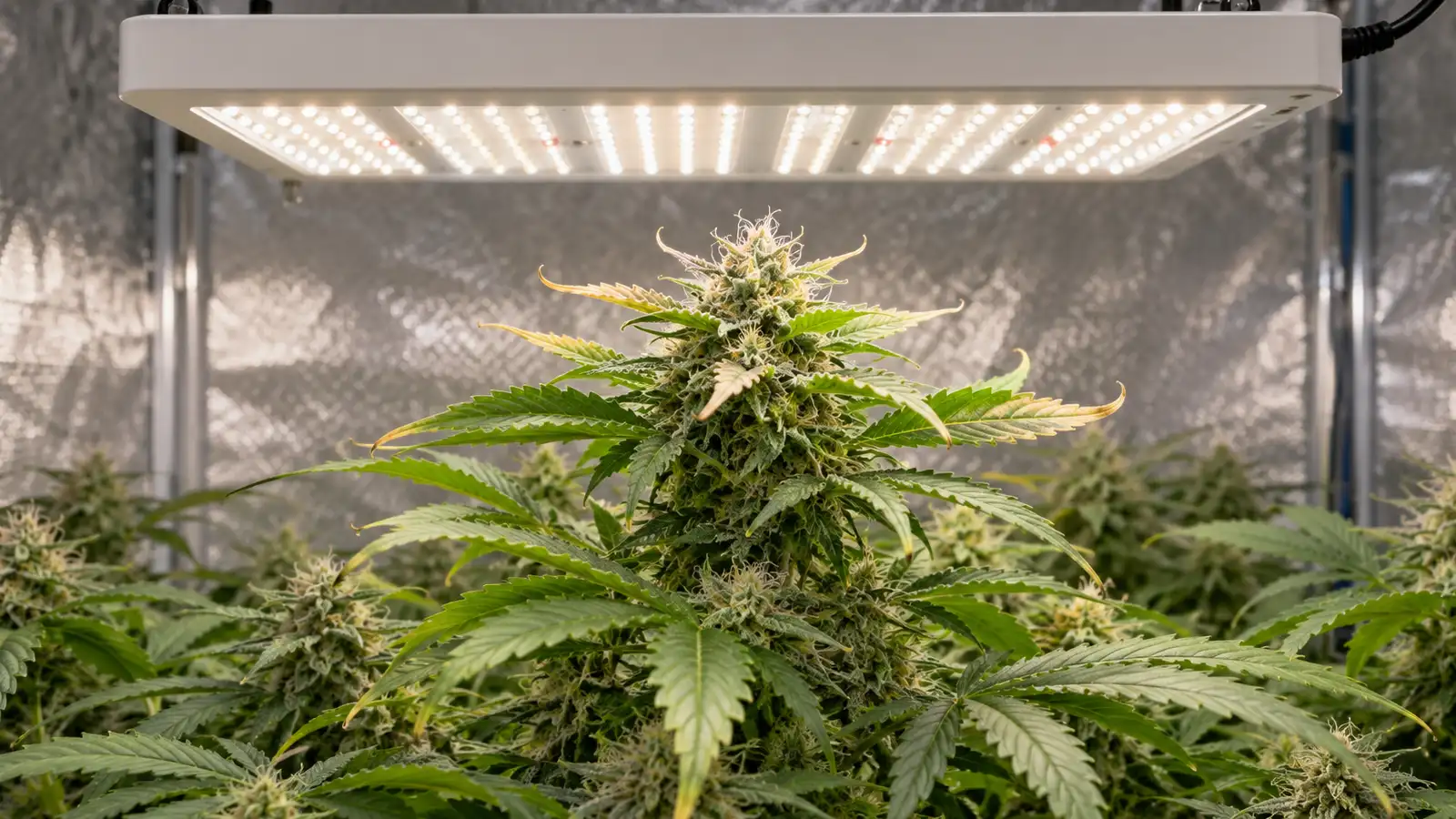
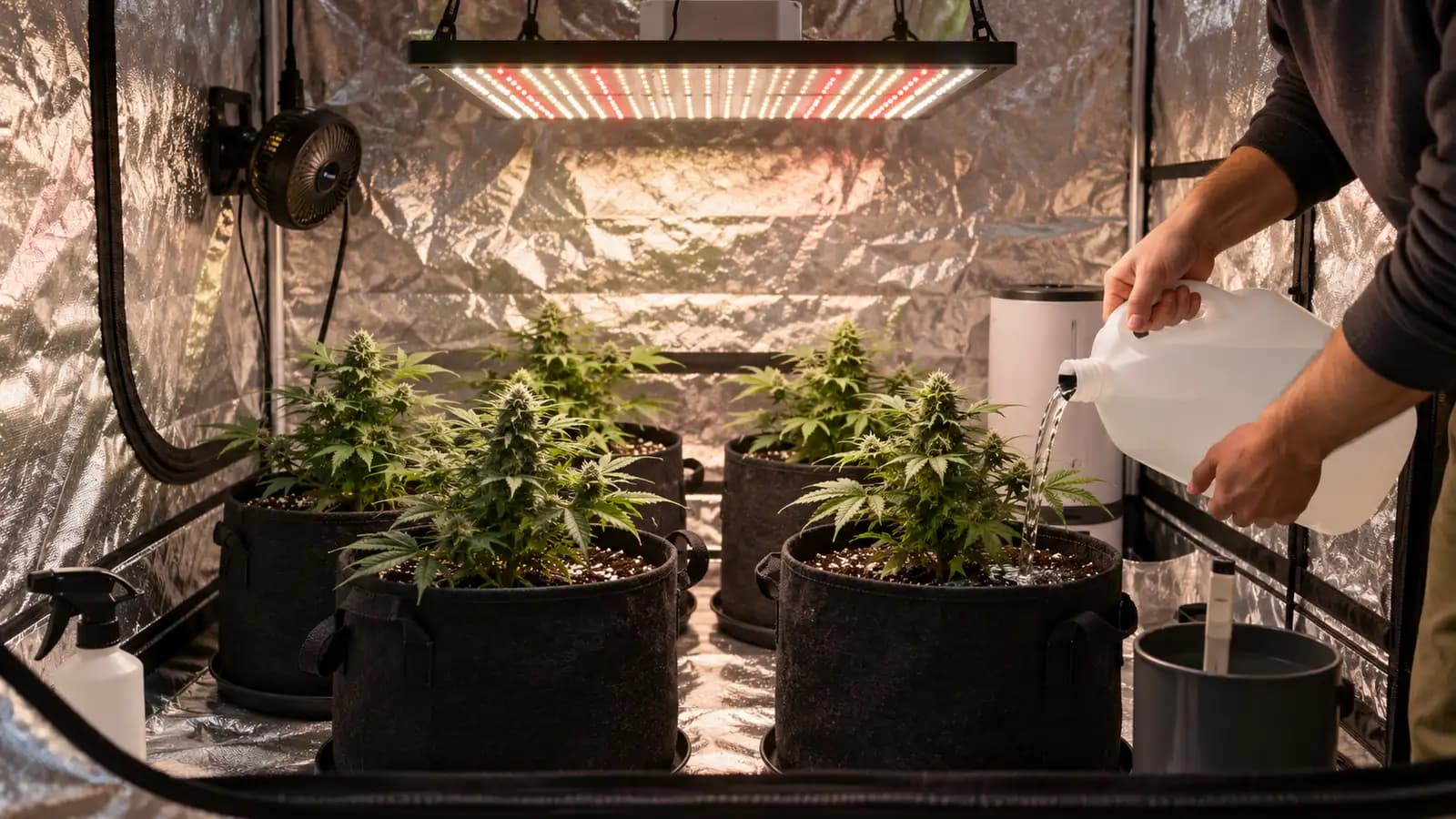
The lamp distance is the lever you can pull at any time, so it is the first thing to get right. Jan van Amsterdam keeps it simple. In veg he uses 18 hours of light and 6 of dark, and in flower 12 and 12. In the growth phase he keeps the lamps high, certainly with cuttings. From a plant height of 20 to 25 cm he lowers them, but not too low, because the plant can burn.
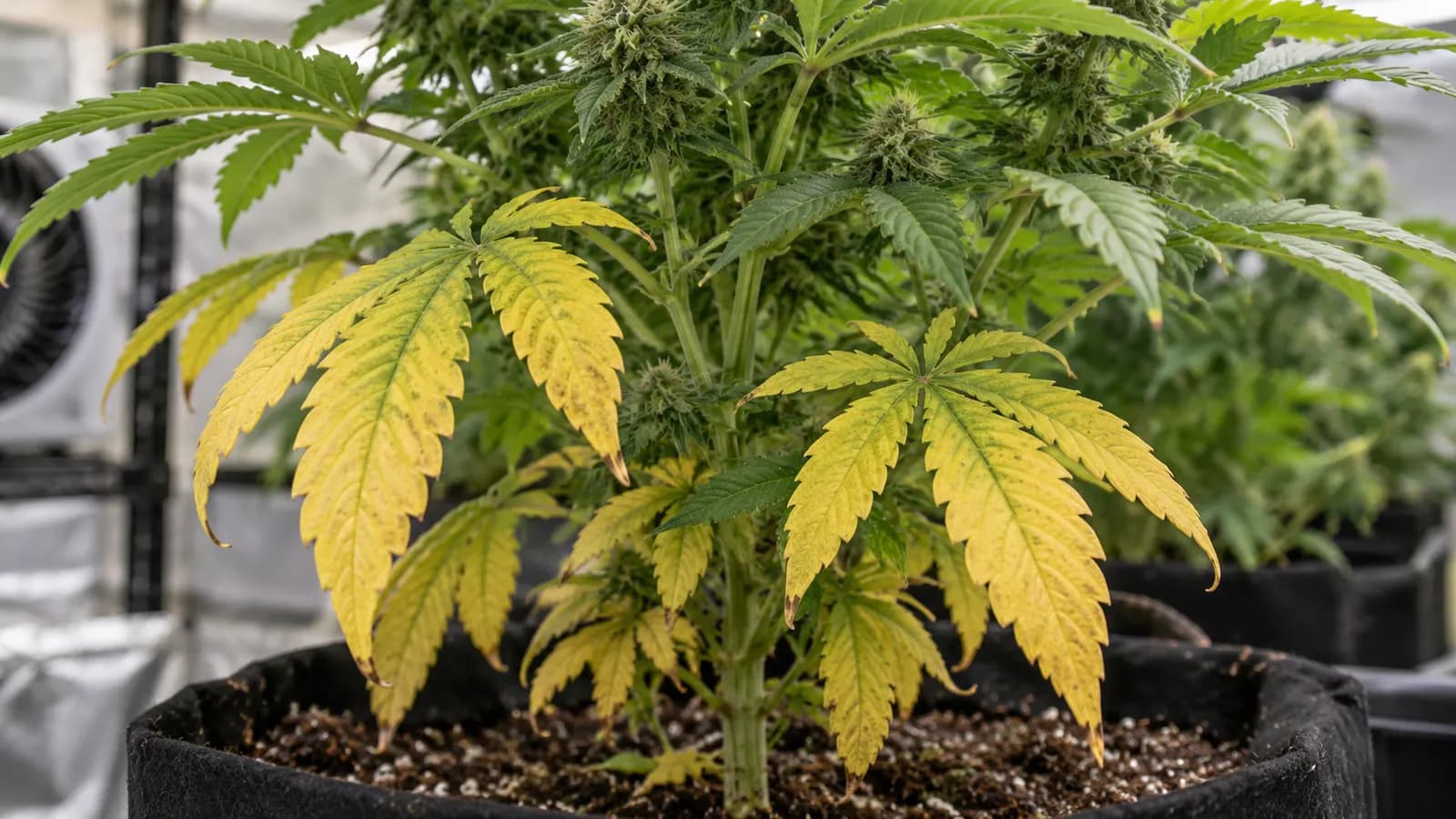
That last part matters for height. A lamp that hangs too high gives a weak light at the top of the plant, and the plant stretches toward it. A lamp that hangs too low burns the leaves at the top and leaves you no room to grow. The right distance depends on the lamp, its power and whether you can dim it. The manual of your lamp gives a starting distance, and the top leaves tell you the rest. Pale, bleached or curled tips under the lamp are a sign that it is too close or too hot, and our guide on light burn and heat stress shows how to tell this from other problems.
A few practical points:
- Raise the lamp as the plant grows, in small steps, instead of waiting until the top is close.
- If your lamp can be dimmed, dim it a little when the canopy is near the light. This buys you some days without losing the plants.
- Use a hanging system with ratchets, so that you can change the height in seconds.
- Check the top of the plant with the back of your hand under the lamp. If it is too warm for your hand, it is too warm for the leaves.
For more on lamp choice, see lighting for indoor growing, and for the temperature around the canopy, read temperature for indoor cannabis.
Which strain suits a small tent?
The cheapest way to control height is to choose a plant that does not need controlling. Before you buy, read the height on the product page and compare it with your tent. Take into account that plants indoors often grow beyond the figure listed. If your tent is low, look for compact plants first and leave the tall ones for a bigger space. Our page with indoor seeds is a good place to start, and the guide on choosing an indoor strain explains what to look at.
Autoflowers are a popular choice for small tents, because they flower on age and not on the light cycle. That means there is no flip and no sudden stretch caused by a change in the light schedule. They can still grow tall, and in the reviews we read, several growers saw their autoflowers end up well above the listed height when they got long hours of light. You will find the range in our autoflower seeds and in the guide on the best light schedule for autoflowers.
Beginners can also start from our beginner-friendly seeds, which forgive a few mistakes. Beginner-friendly does not mean short, so check the height anyway.
Which training methods keep a plant low?
Training changes the shape of the plant so the light reaches more of it. Done early, it keeps the top from running away and gives you several tops at the same height. Our full guide on low stress training explains each method. Here is the short version for a tent.
Low stress training (LST)
You bend the main stem to the side and tie it down, and the side shoots grow upward and take over the height of the old top. In the reviews we read, LST is the method growers mention most, and they say the plant turns back toward the light within two days. For autoflowers, growers say a little LST is enough.
Topping
Cutting off the main tip makes the plant grow two main shoots instead of one. A 2025 review explains that removing the tip breaks apical dominance and wakes up the side buds (Ijoma et al., 2025). In the reviews, growers who topped once at around 30 cm said their plants stayed lower and bushier. One study on a CBD-type strain found that topped plants made more flower and leaf dry weight, but their total CBD yield did not differ significantly from untouched plants (Crispim Massuela et al., 2022). That was one strain under research conditions, so treat it as a hint and not a promise.
Do not top autoflowers. Jan van Amsterdam says it plainly: autoflowers are not topped. They have little time to recover and go into flower early, so topping can disturb that.
Screen of green (ScrOG)
You stretch a net over the plants and weave the shoots under it, so the canopy sits at one height. Jan uses ScrOG with feminized and regular plants, not with autoflowers. His way of working goes like this:
- Use as few plants as possible.
- Put the net 30 to 50 cm above the pots, and use two or three nets.
- Weave until the net is about 75% full, and then switch to 12/12.
- Bend the shoots at the end of the day.
- Around the switch, the underside of the plant is left bare.
He also says that low binding and ScrOG are not for beginners. That fits what we see: a first grow has enough to learn already. Our guide on screen of green has the details if you want to try it later.
Removing leaves and lower branches
Taking away the lower leaves and branches lets light reach the middle of the plant. A study on large medical cannabis plants of around 2.5 m found that the flowers at the bottom had lower cannabinoid levels, which matched the poor light down there. Removing lower leaves and branches raised the levels and made the plant more uniform (Danziger and Bernstein, 2021). Those were big plants and not a home tent. The principle still helps: an even canopy uses your light better than a cone does.
What goes wrong when plants grow into the light?
When the top of the plant gets too close to the lamp, the problems start at the top. Leaves bleach, curl or burn, and the buds nearest the light suffer most. Heat builds up under the lamp, and it is hard to give the plant the airflow it needs. If the top touches the tent roof, air has a hard time moving around it.
That matters in flower. Utah State University Extension advises keeping greenhouse humidity below 50% to prevent bud rot, and says an infection cannot be cured, so prevention counts (USU Extension). Jan gives the same advice for the bloom phase: keep the humidity under 50%, do not spray flowering buds, and avoid bruising them. A dense canopy pressed against the roof makes all of this harder. Read more in our guides on air circulation in a grow room and VPD.
The way out of a plant that is too tall is limited. You can lower the stem by bending it, dim or raise the lamp, and tie down the tallest tops. You should not cut a plant hard in flower, because the plant needs its leaves and it takes time to recover. This is why prevention is better.
A simple plan for your next grow
Here is a plan you can follow from seed to harvest, written for a photoperiod plant in a tent:
- Measure your tent from the pot to the roof, and decide how much room you want to leave under the lamp.
- Choose a plant with a listed height that fits, and expect it to end up a bit taller indoors.
- Start with the lamp high, and lower it from 20 to 25 cm plant height, as Jan does.
- Train early. A little LST, or one topping at around 30 cm, is enough for most plants.
- Flip to 12/12 while the plant is still well below the maximum height, and measure the stretch.
- Raise or dim the lamp as needed during the first two weeks of flower.
- Write down what happened, and adjust the flip height for the next run.
For an autoflower, skip the flip and the topping. Use a little LST early, keep the lamp at a distance that does not burn the top, and choose a compact plant for a low tent.
Frequently asked questions
How do I stop my plants from hitting the lamp?
Raise or dim the lamp, bend the tallest tops down and tie them, and flip to 12/12 earlier in the next run. Keep measuring each week so you see the problem before the top reaches the light.
Can I top an autoflower to keep it short?
We advise against it. Jan van Amsterdam does not top autoflowers, because they flower on their own clock and have little time to recover. A little low stress training early on is the safer choice.
When should I lower the lamp?
Jan keeps the lamps high in the growth phase and lowers them from a plant height of 20 to 25 cm, but not too low, because the plant can burn. Watch the top leaves: pale or curled tips mean the light is too close or too hot.
How much will my plant stretch after the flip to 12/12?
It depends on the genetics. Plants often grow a lot in the first one to two weeks after the switch. Measure your own plant at the flip and one and two weeks later, so you know what to expect from that strain.
Is ScrOG a good idea for a first grow?
Jan says low binding and ScrOG are not for beginners. Start with a compact plant and a little LST, and try a net on a later grow.
Does a stronger lamp make plants shorter?
Not by itself, but a weak lamp tends to give long and thin stems. Growers in our reviews saw plants branch out more after they switched to a better LED. Keep the right distance, because a strong lamp too close will burn the top.